Hybrid catalysts combine light and enzymes for sustainable chemical production
Supraparticles combine photocatalysis with biocatalysis in a single reaction system
Advertisement


How can chemical reactions be made more energy-efficient, safer and more sustainable - and at the same time be used for industrial applications? Researchers at the Fraunhofer Institute for Microengineering and Microsystems IMM, together with two other Fraunhofer Institutes and supported by analytics specialists from Friedrich-Alexander-Universität Erlangen-Nürnberg and Freie Universität Berlin, have developed a solution to precisely this question. The collaboration resulted in novel hybrid catalyst particles that combine light-driven photocatalysis and efficient biocatalysis in a single reaction system.
The results have just been published in the journal Advanced Functional Materials and demonstrate the scientific quality and technological value of the work. The article entitled "Supraparticles consisting of graphitic carbon nitride nanoparticles and silica nanoparticle-supported horseradish peroxidase as tailorable hybrid catalysts for photo-biocatalytic cascade reactions in batch and continuous flow mode" highlights how incompatibilities between photocatalysis and enzyme-based biocatalysis can be overcome through the targeted design of nanostructured materials.
Combined photo- and biocatalytic cascade reactions are regarded as a key technology for resource- and energy-efficient chemical processes. In practice, however, their implementation often fails due to the limited compatibility of the catalyst systems involved. The work that has now been published addresses precisely this challenge and shows an approach for combining both catalytic functions in a targeted manner.
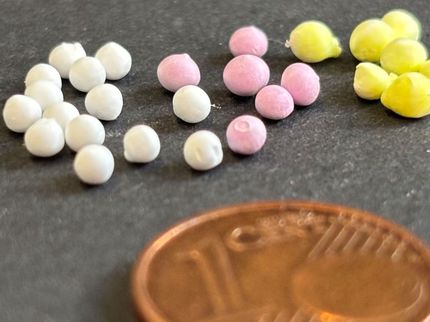
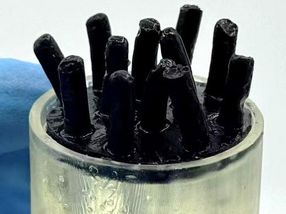
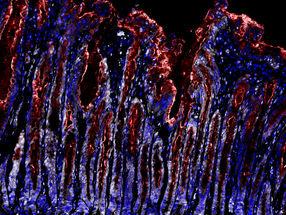
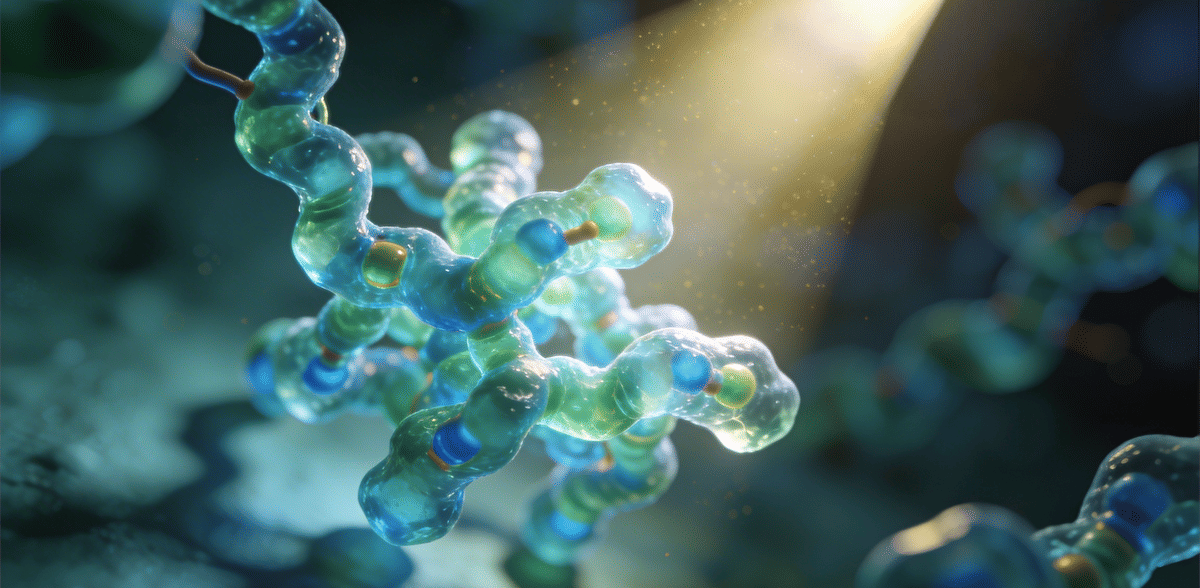
The research team at Fraunhofer ISC has developed hybrid catalysts based on supraparticles in which both functions are specifically combined but spatially separated from each other. Supraparticles are composed of two types of nanoparticulate building blocks: carbon nitride (C3N4) as the photocatalyst building block, combined with silicon dioxide particles on which the enzyme horseradish peroxidase (HRP) has been immobilized and represent the biocatalyst building block. The particles are produced in a scalable spray-drying process and can be flexibly adapted to different applications.
One focus of the work at Fraunhofer IMM was on the process engineering design and detailed understanding of the coupled reactions. The researchers systematically investigated the conditions under which photocatalytic and enzymatic sub-steps can interact stably. On this basis, a so-called compatibility window was defined in which both catalysts retain their respective functions. This showed that the targeted spatial organization of the catalyst components is crucial in order to avoid undesired interactions and to control the reaction cascade efficiently. These findings are particularly important for the transfer to continuous processes, as they enable reproducible and robust process control.
When irradiated with visible light, the photocatalyst generates hydrogen peroxide directly in the reaction system - exactly the substance that the enzyme needs for the next reaction step. In this way, chemical processes can be coupled without the need for complex preparation of intermediate products or storage of hazardous substances. This increases safety, reduces the use of energy and materials and considerably simplifies process control.
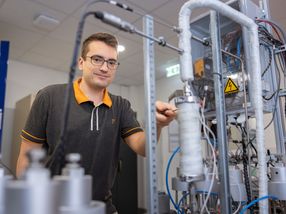
A particular strength of the work lies in its proximity to industrial applications. At the Fraunhofer IMM, the hybrid catalysts were successfully tested in continuous flow-through processes. In a specially developed capillary photoreactor, they demonstrated high stability and productivity not only on a laboratory scale, but also under practical conditions. This represents an important step towards scalable production processes.
Results open up new perspectives
The developed supraparticulate hybrid catalysts combine the high reactivity of light-driven photocatalysis with the selectivity of natural enzymes. This results in a powerful approach that opens up new perspectives for sustainable chemical production processes, such as
- the efficient synthesis of fine chemicals and pharmaceuticals,
- the use of visible light as a renewable energy source for chemical synthesis
- process intensification through coupled catalytic systems,
- and sustainable approaches in flow chemistry.
Clear advantages for industrial customers
The newly developed hybrid catalysts are specifically designed to meet the requirements of industrial users and offer clear advantages for companies in the pharmaceuticals, specialty chemicals, biotechnology and environmental technology sectors in particular.
They enable robust operation in both batch and continuous flow mode and thus allow an industrially relevant throughput. The use of flow chemistry improves thermal management, reduces space requirements and increases operational reliability. The in-situ generation and direct conversion of hydrogen peroxide further increases process safety, while coupled cascade reactions eliminate the need for complex intermediate processing and thus reduce waste volumes and material costs. At the same time, mild, energy-efficient reaction conditions - activated by visible light and aqueous reaction media - enable resource-conserving and regulatory-compliant process control. The modular architecture of the supraparticles can be flexibly adapted to different applications, for example in the pharmaceutical, fine or agrochemical industries, and supports customized process solutions. The immobilization of the enzymes also increases their stability and service life and simplifies downstream separation. Thanks to their compatibility with common capillary and microreactor platforms, the hybrid catalysts can be integrated into existing flow-through systems without major conversions and thus quickly transferred to industrial processes.
"Our aim is to design new catalytic concepts from the outset in such a way that they can be transferred to industrial processes and create measurable added value there," says Dr. Thomas Rehm, group manager at Fraunhofer IMM. "The combination of photocatalysis and biocatalysis opens up new technological possibilities for this."
Bundled Fraunhofer expertise in a network
The work was the result of close cooperation between several Fraunhofer Institutes and is an example of how the pooling of different areas of expertise within the Fraunhofer-Gesellschaft can lead to application-oriented solutions.
- Fraunhofer Institute for Silicate Research ISC
- Fraunhofer Institute for Microtechnology and Microsystems IMM
- Fraunhofer Institute for Molecular Biology and Applied Ecology IME
and supported by specialized analyses from
- Friedrich-Alexander-University Erlangen-Nuremberg
- Free University of Berlin.
Note: This article has been translated using a computer system without human intervention. LUMITOS offers these automatic translations to present a wider range of current news. Since this article has been translated with automatic translation, it is possible that it contains errors in vocabulary, syntax or grammar. The original article in German can be found here.


Other news from the department science