Termite genome lays roadmap for 'greener' control measures
Advertisement


A team of international researchers has sequenced the genome of the Nevada dampwood termite, providing an inside look into the biology of the social insect and uncovering new genetic targets for pest control. Michael Scharf, a Purdue University professor of entomology who participated in the collaborative study, said the genome could help researchers develop control strategies that are more specific than the broad-spectrum chemicals conventionally used to treat termite infestations.
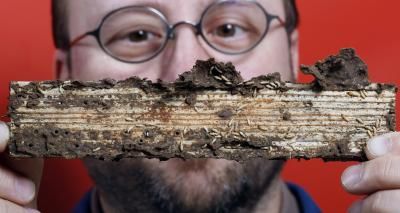
Michael Scharf eyes a group of eastern subterranean termites, destructive pests in Indiana and the Eastern US.
(Purdue University / Tom Campbell
"The termite genome reveals many unique genetic targets that can be disrupted for better termite control," said Scharf, who is the O. Wayne Rollins/Orkin Chair in Molecular Physiology and Urban Entomology. "Depending on which gene or protein that is targeted, we could disrupt termites' neurological processes, molting, digestive factors or cuticle formation. We're just limited by our imagination."
The Nevada dampwood termite is the first termite species to have its genome sequenced. While dampwood termites do not cause significant damage to buildings, they are closely related to key pests such as the eastern subterranean termite, which is the main pest species in Indiana and the eastern U.S.
The genome could also help researchers better understand the symbiosis between termites and the more than 4,000 species of bacteria that thrive in their guts, aiding in processes such as digestion and defense. Previous studies of the termite gut were hampered by the inability to distinguish between termite and microbe genes. Understanding the gut biology is important to Scharf, who is researching the enzymes that termites use to digest wood. Identifying these enzymes could lead to novel methods of producing cellulosic biofuels.
"The genome provides a well-defined roadmap that could help us find the right cocktail of enzymes to break wood down into its simple sugars," he said. "It takes a lot of the guesswork out."


Other news from the department science