Researchers from BGU have generated a promising drug candidate for the treatment of Psoriasis
Advertisement


Researchers from the Department of Life Sciences and the National Institute for Biotechnology in the Negev at Ben-Gurion University of the Negev in collaboration with Teva pharmaceutical industries LTD. have engineered a natural immune system receptor into a promising drug candidate for the treatment of psoriasis.
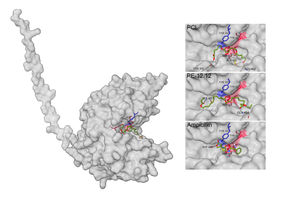
One of the key signals involved in the progression of Psoriasis is the immune system protein Interleukin 17 (IL-17). In a paper just published in Chemistry and Biology entitled: “Directed Evolution of a Soluble Human IL-17A Receptor for the Inhibition of Psoriasis Plaque Formation in a Mouse Model”, Dr. Marianna Zaretsky and Prof. Amir Aharoni from BGU together with Dr. Liora Sklair-Tavron, Dr. Joel Kaye and Revital Etzyoni from Teva developed a method to inhibit IL-17 pro-inflammatory signals. The team engineered the extra-cellular soluble domain of IL-17 receptor to bind with high affinity to the natural IL-17 protein. The engineered IL-17R was developed by a directed evolution approach, in which an ensemble of mutants is screened for improved properties.
The resulting engineered IL-17R had a much better binding affinity and possessed more stability relative to the natural IL-17R receptor, making it a promising drug candidate. In the paper, the team showed that this engineered IL-17R is highly effective in reducing IL-17 induced inflammatory signals in mice models. Moreover, injection of the engineered IL-17 receptor into a mouse model with acute human Psoriasis led to the abolishment of the symptoms, essentially curing the disease.



Other news from the department science