Watching synapses at work
Advertisement


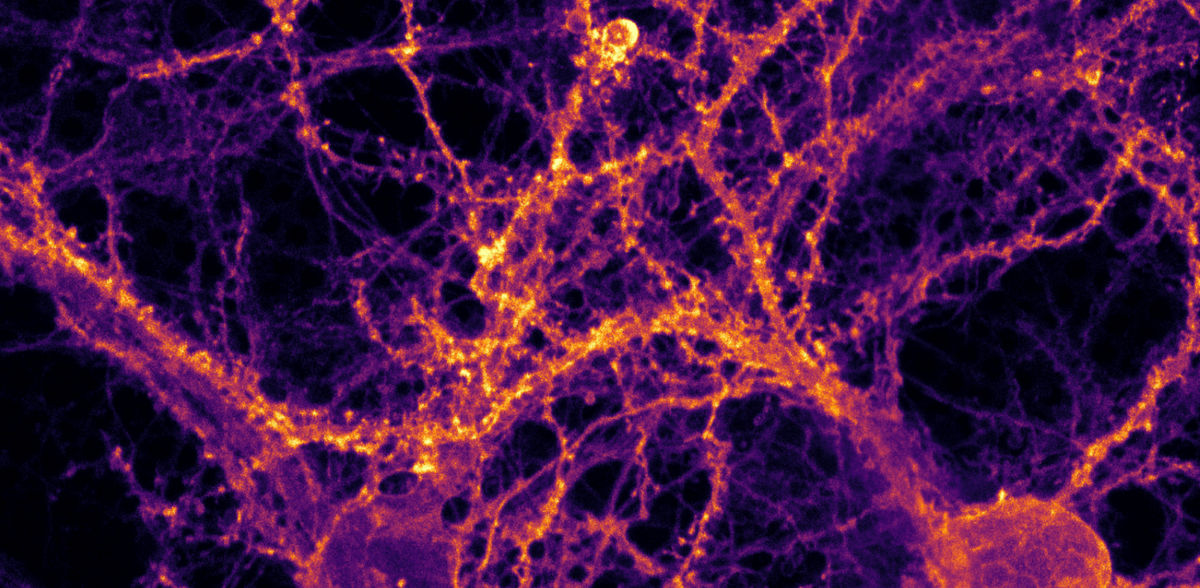
The moment in which a nerve cell releases its neurotransmitters into the synaptic cleft is extremely short. Researchers at Charité - Universitätsmedizin Berlin and the Max Delbrück Center have succeeded in capturing this moment under the microscope. The images of the fusing vesicles have now been published in the journal Nature Communications.
The process only takes a few milliseconds: A vesicle, filled with neurotransmitters and only a few nanometers in size, approaches the cell membrane, fuses with it and releases its messenger substances into the synaptic cleft - so that they can attach to the next nerve cell. A team led by Prof. Christian Rosenmund, last author of the publication and Deputy Director of the Institute of Neurophysiology at Charité, has captured this crucial moment for the work of the brain in microscopic images.
Dot-shaped connections
"Until now, nobody knew how the fusion of synaptic vesicles with the cell membrane takes place in detail," says the first author of the study, Dr. Jana Kroll, who is now a researcher in Prof. Oliver Daumke's "Structural Biology of Membrane-Associated Processes" group at the Max Delbrück Center. "In our experiments with mouse neurons, we were able to show that a point-like connection forms first. This tiny stalk then expands into a pore through which the neurotransmitters enter the synaptic cleft," explains Jana Kroll.
"With the help of the technology developed over five years, it has been possible for the first time to watch synapses at work without disturbing them," adds Christian Rosenmund. "Jana Kroll has done real pioneering work here," says the scientist, who is also a member of the board of the NeuroCure Cluster of Excellence.
Shock-frozen in ethane
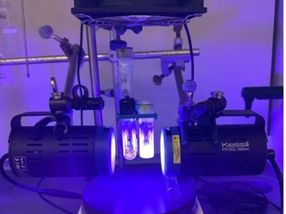
In order to observe the synapses in real time, the researchers used nerve cells from mice, which they had previously modified using optogenetics so that the cells are activated by a light signal - and then immediately begin to release neurotransmitters. Within one to two milliseconds, the team then shock-froze the neurons in ethane at minus 180 degrees Celsius. "All cellular processes come to an immediate standstill during this process, plunge freezing, and can be visualized using electron microscopy," explains Jana Kroll.
The scientists discovered another interesting detail: "We were able to see that most of the fusing vesicles are connected to at least one other vesicle via small filaments - as soon as one vesicle fuses with the cell membrane, the next one is ready to go," reports Jana Kroll. "We assume that this direct form of vesicle recruitment makes it possible for neurons to send signals over a longer period of time and thus maintain their communication."
Better treatment for epilepsy
The fusion of vesicles, which the team visualized, takes place millions of times every minute in our brains. Understanding the process in detail is also important for medical purposes: "In many people with epilepsy or other synaptic diseases, mutations in proteins involved in vesicle fusion are known," explains Christian Rosenmund. "If we can uncover the exact role of these proteins, we can more easily develop targeted therapies for such synaptopathies."
"The approach we presented for time-resolved cryo-electron microscopy using light is also not limited to neurons, but can be applied in many areas of structural and cell biology," adds Jana Kroll. She herself would now like to repeat her experiments at the Max Delbrück Center, initially with human neurons obtained from stem cells. However, this will not be an easy task, the researcher announces: "The cells need around five weeks in the lab to develop their first synapses and are extremely sensitive."
Note: This article has been translated using a computer system without human intervention. LUMITOS offers these automatic translations to present a wider range of current news. Since this article has been translated with automatic translation, it is possible that it contains errors in vocabulary, syntax or grammar. The original article in German can be found here.
Original publication
Jana Kroll, Uljana Kravčenko, Mohsen Sadeghi, Christoph A. Diebolder, Lia Ivanov, Małgorzata Lubas, Thiemo Sprink, Magdalena Schacherl, Mikhail Kudryashev, Christian Rosenmund; "Dynamic nanoscale architecture of synaptic vesicle fusion in mouse hippocampal neurons"; Nature Communications, Volume 16, 2025-12-13



Other news from the department science