Pulling the plug on tumours: Varun Venkataramani receives Paul Ehrlich and Ludwig Darmstaedter Early Career Award
Cancer cells tap into the nervous system's power grid: Heidelberg neurologist co-founded the research field of “Cancer Neuroscience"

Advertisement


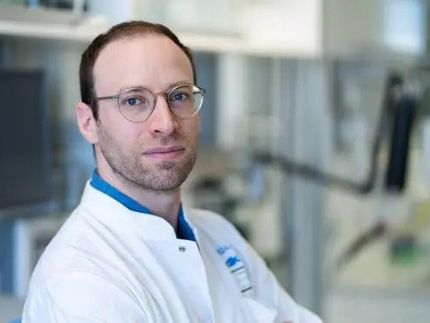
Neurologist Dr. Varun Venkataramani (36) from Heidelberg University Hospital will be awarded the Paul Ehrlich and Ludwig Darmstaedter Early Career Award 2026, the Scientific Council of the Paul Ehrlich Foundation announced. The prizewinner has fundamentally expanded our understanding of glioblastomas –particularly malignant brain tumors. They arise from glial cells, whose task is to protect and nourish nerve cells. Venkataramani discovered that glioblastomas hijack the nervous system to tap into electrical signals, which they then use to accelerate their deadly growth. A drug to interrupt this electrical activity is already being tested on patients.
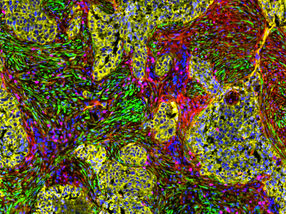
Brain tumors do not consist of nerve cells. This is because mature nerve cells – with very few exceptions – have lost the ability to divide. Most brain tumors are gliomas. They are thought to originate from precursors of glial cells. In an adult brain, glial cells are about as numerous as nerve cells (approximately 100 billion), and primarily serve as structural support and nutrient providers. Glioblastomas are particularly dangerous. Even with the best available treatment options, the average survival time from diagnosis to death for patients with this type of tumor is a maximum of 18 months. Glioblastomas double in volume within a month. Their cells spread diffusely through the brain from the tumor core, migrating along nerve pathways. In doing so, they form a network that entangles the nerve cell network by connecting to other glioma cells via extremely long and thin extensions.
When Varun Venkataramani examined these extensions under an electron microscope eleven years ago as part of his medical doctoral thesis, his sharp eye was drawn to a particular section of the image: What he saw was not a connection between two tumor cells, but rather a link between a tumor cell and a nerve cell – via a structure that looked like a synapse, i.e. a classic electrochemical junction between two nerve cells. It seemed so unbelievable that both he and his doctoral advisors initially assumed it was an artifact. But Venkataramani did not give up. Through persistent effort and exceptional methodological skill, supported by his colleagues and mentors, he succeeded in experimentally proving his observation in the following years. In 2019, this work culminated in a sensational publication in the top journal Nature. Glioma cells that aim to spread actively form synaptic contacts with nerve cells. In doing so, they mimic the behavior of immature nerve cells during brain development. Through these synapses, they tap into electrical impulses from presynaptic nerve fibers, which in turn promotes their proliferation and accelerates their spread.
The electrical signals that trigger tumor growth are transmitted in the synaptic cleft between nerve cells and glioma cells, primarily through the release of the neurotransmitter glutamate. It binds to so-called AMPA receptors on the tumor cells, causing calcium ions to flow into the cells and generate an electrical current. These receptors, when overactivated, are also implicated in the development of epileptic seizures. The selective AMPA receptor blocker perampanel has been approved for the treatment of epilepsy since 2012. It could therefore also interrupt the transmission of nerve signals to tumor cells. This is why Venkataramani and his team are rapidly advancing the repurposing of this drug for the previously unapproved indication of glioblastoma. They have already demonstrated its efficacy in preclinical trials. A prospective Phase II clinical trial is currently underway.
The perampanel study marks only the beginning of what Venkataramani sees as the potential development of effective glioma therapies. Recently, his research group – where technology and therapy development go hand in hand – provided proof of concept for a gene therapy approach that could one day be used in the diagnosis and treatment of gliomas. In this procedure, only those nerve cells that are connected to tumor cells via synapses are selectively labeled with dyes. These nerve cells are then primed for programmed cell death (apoptosis). Once they undergo apoptosis, the tumor cells lose the connection that was essential for their growth. In other words, they are disconnected from the nervous system's power grid.
The field of cancer neuroscience did not exist before Venkatarami's discovery. He co-founded it and is playing a key role in its development. He sees his primary task as decoding the brain's “tumor connectome" with ever greater precision. As the field of cancer neuroscience continues to expand, it is becoming increasingly clear that interactions between the nervous system and cancer cells also promote tumor growth in other organs.
Varun Venkataramani, MD, PhD, studied human medicine at Heidelberg University from 2009 to 2016. There, he was selected for the structured doctoral program, which enables particularly gifted medical students to pursue a dual doctorate. In 2019, he earned his Dr.med., followed by a Dr. rer. nat. one year later. Since 2022, he has been leading a 15-member research group at the Neurological Clinic of Heidelberg University Hospital, where he also works as a neurologist.
The prize will be awarded – together with the main prize in 2026 – on March 14, 2026, at 5 p.m. by the Chairman of the Scientific Council of the Paul Ehrlich Foundation in Frankfurt's Paulskirche.


Other news from the department science