When immune cells become cancer hunters
Advertisement


The University Hospital Leipzig (UKL) has recently treated a cancer with CAR-T cells for the 300th time. This means that some severe forms of blood and lymph gland cancer such as acute lymphoblastic leukemia, B-cell non-Hodgkin's lymphoma and multiple myeloma can now be treated - and with significantly better chances of success. Since the start of this innovative form of therapy at the UKL in 2019, the number of treatments carried out in this way has increased year on year. This year alone, 81 patients have already received CAR-T cell therapy. A further nine treatments are planned by the end of the year.
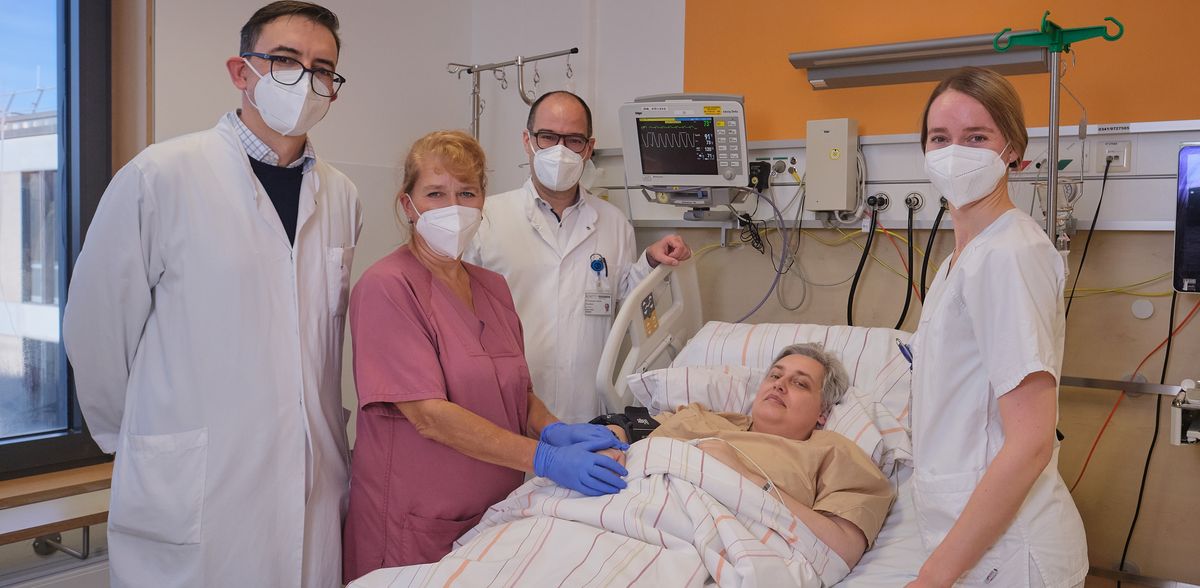
"It's now 1:03 pm. On your marks, get set, go ...!" With these words, Dr. Marie Jung, a junior doctor at the Clinic and Polyclinic for Haematology, Cell Therapy, Haemostaseology and Infectiology at Leipzig University Hospital (UKL), opens the infusion tube. Patient Ines Kortmann watches attentively as the life-saving fluid drips out of the infusion container. The 37-year-old suffers from non-Hodgkin's lymphoma, a cancer that affects the entire lymphatic system. She was referred from the Städtisches Klinikum St. Georg, with which the UKL signed a cooperation agreement just a few weeks ago and with which a close collaboration in the field of cell therapy has already been established for years. A previous conventional therapy approach had not produced the desired result.
Chances of recovery better than with any other therapy
"If a relapse occurs in a disease such as non-Hodgkin's lymphoma, the chances of recovery were not good just a few years ago because patients often did not respond sufficiently and, above all, not permanently to the drugs available at the time," recalls PD Dr. Vladan Vučinić, Senior Physician at the Department of Haematology, Cell Therapy, Haemostaseology and Infectiology. Response rates are significantly higher with CAR-T cell therapy than with other conventional forms of therapy.
"We use the body's own immune cells, which have been genetically modified in the laboratory, to detect and eliminate cancer cells," says the senior physician specializing in cellular therapies and lymphomas, summarizing the principle of the treatment. The therapy begins with the filtering out of certain immune cells, the T-cells, from the patient's blood in the UKL's Hematology Outpatient Clinic. These are then genetically modified in a specialized laboratory in order to equip them with a so-called chimeric antigen receptor (CAR). This CAR molecule on the cell surface helps the immune cells to specifically recognize and attack the cancer cells. The resulting CAR-T cells are then multiplied in the laboratory in a process lasting several weeks. Before the infusion, the patient undergoes a preparatory mild chemotherapy in which most of the body's own T cells are reduced. This creates space for the newly formed CAR T cells to work effectively. Two days after the end of chemotherapy, the genetically modified CAR-T cells are finally administered to the patient as a single infusion.
One of the largest CAR-T cell centers in Germany
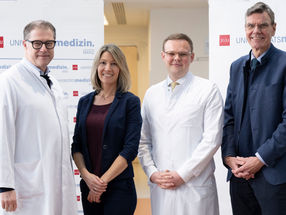
Certified in spring 2019 as the sixth center in Germany for treatment with CAR-T cells, this therapy has been used at Leipzig University Hospital since June 2019. By the end of 2022, the UKL was the first center in Germany and Europe to be approved for all available CAR-T products. "We are still one of the leading locations in the field of cell therapy in Germany," says Prof. Dr. Klaus Metzeler, Acting Director of the Department of Haematology, Cell Therapy, Haemostaseology and Infectiology at the UKL. "In other words: We are one of the largest centers for CAR-T cell therapy and one of the few in Germany that can offer patients the entire spectrum of available CAR-T cell therapies. The basis for this is not least the excellent interdisciplinary cooperation and high motivation of the staff at our center. This brings together different areas of expertise - an important prerequisite for successfully combating cancer in all its diversity and complexity. Thanks to our extensive experience in this field, we are also able to offer our patients innovative, completely new treatments as part of clinical trials."
UKL builds up its own Car-T cell production
Leipzig University Hospital is also currently laying the foundations for its own CAR-T cell production, which is scheduled to start next year. This should make individually tailored CAR-T cell therapies possible in the future. "It is currently becoming increasingly apparent that CAR-T cell therapy is also becoming more and more important for other types of cancer and autoimmune diseases," explains Prof. Dr. Klaus Metzeler. "We very much hope that even more patients will be able to benefit from such innovative forms of therapy in the future. They could also replace other expensive forms of therapy." "With CAR-T cell therapy, we can now bring the disease under control for a long time in many patients and in some cases even cure it permanently," says PD Dr. Vladan Vučinić. An immunodeficiency persists for a long time after CAR-T therapy. However, this can be countered with targeted prophylactic measures.
Close monitoring after the therapy
Ines Kortmann initially remained an inpatient at the UKL for around two weeks so that any side effects could be identified and treated at an early stage. In four weeks at the earliest, it should be possible to see whether her cancer cells have shrunk. A series of clinical and diagnostic examinations will be carried out in close cooperation with the doctors in private practice who are treating her. For now, she is happy that she has received the potentially life-saving infusion. "Now I have to wait another hour. After that, I'm looking forward to my lunch - and tonight I'll call my family and tell them about this exciting day."
Note: This article has been translated using a computer system without human intervention. LUMITOS offers these automatic translations to present a wider range of current news. Since this article has been translated with automatic translation, it is possible that it contains errors in vocabulary, syntax or grammar. The original article in German can be found here.
Other news from the department science