New Strategies for Preserving Native Cocoa Varieties
Advertisement


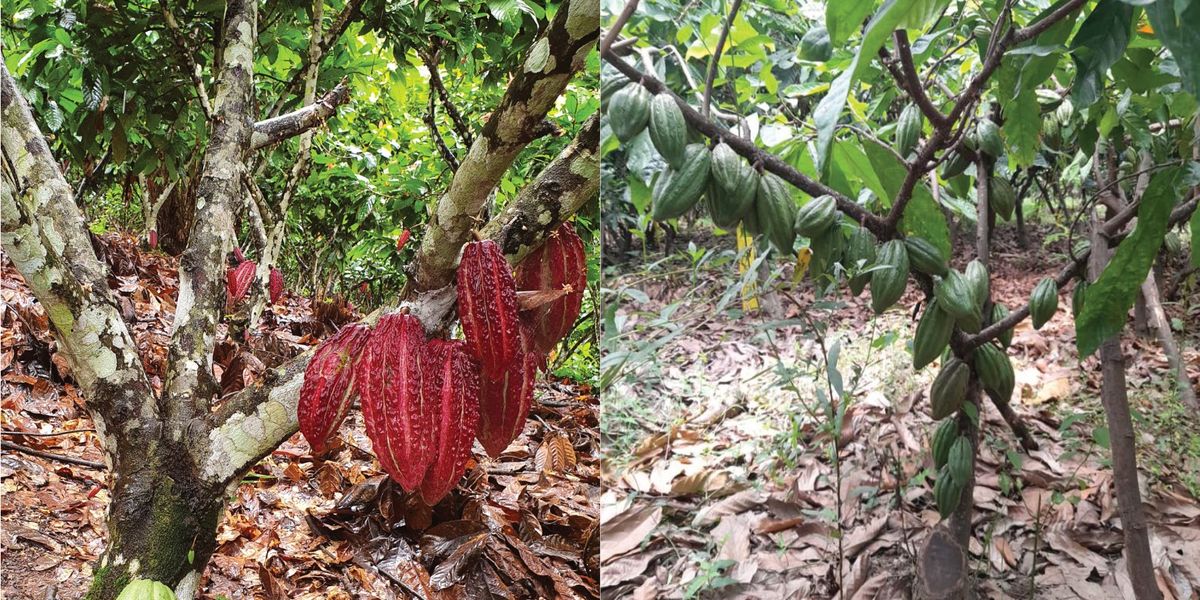
Large-scale cocoa cultivation often displaces native varieties in producing countries such as Peru. Yet local cocoa varieties yield particularly aromatic beans and contribute to genetic diversity. An international research team led by the University of Göttingen and the research organization “Bioversity International” has now demonstrated how high yields and genetic diversity can be combined: They grafted high-yielding cultivars onto mature trees, resulting in a 59 percent increase in yield after just three years. The results were published in the journal *Agronomy for Sustainable Development*.
The researchers grafted various “genotypes”—that is, cultivars of the “Blanco de Piura” cocoa variety—onto more than 2,000 trees across 12 plantations in Peru. “Blanco de Piura” is native to northwestern Peru and is highly prized for the delicate aroma of the chocolate made from its beans, but it was previously considered to have low yields. However, when the team grafted mature cacao trees with particularly high-yielding genotypes of this variety, yields rose to a level similar to that of the widely cultivated commercial variety CCN-51. “This is great news for cocoa producers in South America, who often consider replacing their native varieties with mass-produced crops,” explains co-author Dr. Evert Thomas, a senior scientist at Bioversity International in Peru. “Through grafting, they can preserve their native trees while achieving higher yields without having to sacrifice the added value of the particularly aromatic cocoa.”
The results also show that genetically diverse cacao plantations are particularly well-suited for smallholder farmers who are rarely able to tend to their fields. In contrast, smallholder farmers who regularly prune their plants and remove infested pods benefit from growing genetically similar cacao plants with a single genotype. The team was also surprised to discover that the selected cocoa varieties are self-pollinating—which explains why even plantations with only one variety are productive.
“This detailed understanding of how native cocoa is grown helps producers of fine cocoa design their plantations in a way that allows them to achieve high yields while preserving genetic diversity,” said agroecologist Dr. Carolina Ocampo-Ariza, who led the study at the University of Göttingen. Co-author Prof. Dr. Teja Tscharntke from the Department of Agroecology and Functional Agrobiodiversity at the University of Göttingen adds: “For centuries, native cocoa varieties have held great cultural significance in Peru, a major cocoa-producing country. This is what makes identifying the best national varieties, cultivation strategies, and plantation designs so valuable.”
Note: This article has been translated using a computer system without human intervention. LUMITOS offers these automatic translations to present a wider range of current news. Since this article has been translated with automatic translation, it is possible that it contains errors in vocabulary, syntax or grammar. The original article in German can be found here.
Original publication


Other news from the department science