Saxon Founder Award 2026: Oxaphil is ‘Newcomer of the Year’
Startup Develops Polyoxazolines as a Biocompatible Alternative to PEG for Pharmaceutical and Cosmetic Products
Advertisement


The TUD Dresden University of Technology spin-off Oxaphil has been awarded the 2026 Saxon Founder Award in the "Newcomer of the Year" category. The expert jury selected the team led by Dr Erik Wegener, David Bonnaire, Laura Fietzke and Leonardo Matassini from a total of 116 entries. At the Chair of Macromolecular Chemistry headed by Prof. Rainer Jordan, Dr Erik Wegener, David Bonnaire, Laura Fietzke and Leonardo Matassini developed a novel class of biocompatible and synthetic polymers intended primarily for use in biomedicine, pharmacy and materials science. The award recognises the innovative start-up project.
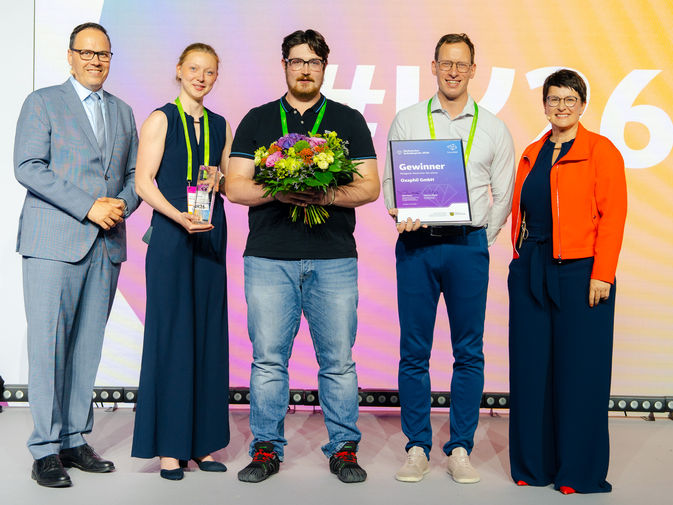
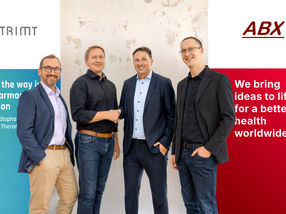
Sachsens Wirtschaftsminister Dirk Panter (links), futureSAX Geschäftsführerin Susanne Stump (rechts) bei der Vergabe des Preises an das Team von Oxaphil: Dr. Laura Fietzke, Leonardo Matassini und Dr. Erik Wegener (v.l.n.r.)
© mio motion GmbH
Polyoxazolines (POx) are a novel class of biocompatible and synthetic polymers. They offer superior physical performance, greater chemical versatility and better biological compatibility than materials used to date, particularly polyethylene glycol (PEG). At the Chair of Macromolecular Chemistry headed by Prof. Rainer Jordan at TUD, Dr Erik Wegener, David Bonnaire, Laura Fietzke and Leonardo Matassini spent several years conducting research specifically into the synthesis of POx. Their idea was a novel technology that would enable POx to be used as a solubilising agent for pharmaceutical and cosmetic products on an industrial scale. These polymers would improve the solubility and stability of ingredients, resulting in more effective products.
From idea to application
The results in the laboratory were promising, and so the team launched their venture in early 2025 with an EXIST start-up grant. With the help of validation funding from the Saxon State Ministry for Economic Affairs, Labour and Energy (SMWA), the first application tests were already underway in collaboration with industry partners.
“By scaling up the technology for producing these valuable special polymers, we can increase the quantities supplied and reduce prices, whilst maintaining the quality of the materials,” explains Dr Erik Wegener, Managing Director of Oxaphil. “This enables us to provide partners from various industries with biocompatible polymers whose properties are tailored to customer requirements. In future, we will continue to expand these successful technologies and tap into more areas of application.”
On the journey from research to spin-off, the team was supported by the TUD|Excellence Centre for Innovation, Transfer and Entrepreneurship (TUD|excite) and the start-up network dresden|exists. An initial business model was developed at LifeTechLab, the incubation programme for ideas from the life sciences. In addition, the TUD|excite team supported the founders in applying for the EXIST start-up grant, with IP transfer, through advice and coaching, and assisted them in their search for investors.
Winning the Saxon Founder Award gives this young spin-off company additional visibility as it continues on its path to growth. It is also yet another example of TUD’s strength in innovation and technology transfer, which makes a direct contribution to value creation in Saxony.


Other news from the department business & finance














Most read news






More news from our other portals













Something is happening in the life science industry ...
This is what true pioneering spirit looks like: Plenty of innovative start-ups are bringing fresh ideas, lifeblood and entrepreneurial spirit to change tomorrow's world for the better. Immerse yourself in the world of these young companies and take the opportunity to get in touch with the founders.
Last viewed contents

Eat right, live longer: could a moderate protein diet be the coveted elixir of youth? - Researchers decode the correlation between dietary protein intake and improved metabolic health in mice
Cenix BioScience Signs Collaboration and Technology License Agreement for In Vivo siRNA Delivery