Chemistry On Four Paws: How Dogs Change Our Indoor Environment
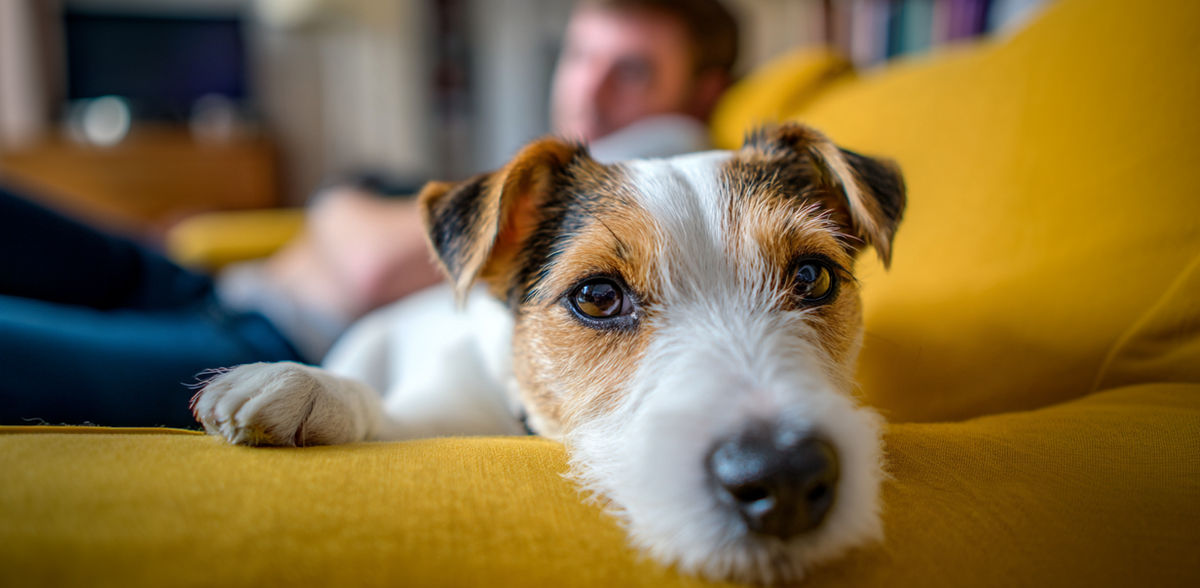
Surprising effect: Petting releases many pollutants, as skin oils react with ozone to produce ultrafine particles
Advertisement


Unseen but all around us, the air we breathe in enclosed spaces is crucial to our health and well-being. Indoor air is not simply outdoor air that has been run through a filter: it has its own chemical makeup and a unique combination of particles, gases and microorganisms. The composition of indoor air, even in well-ventilated spaces, depends on the room’s occupants and what they’re doing, as well as any objects located there. And because indoor air has many sources of its own, concentrations of many pollutants can be as high as—or higher than—outdoor levels, especially during everyday activities like cooking or cleaning.
And while the impact of human occupants on air quality has long been a subject of research, no one has ever taken a close look at the role of dogs. Yet these four-legged friends have long been part of everyday life: over half a million live in Swiss homes, with 10.5 million in Germany.
A study led by the École Polytechnique Fédérale de Lausanne (EPFL) now closes this research gap. The Max Planck Institute for Chemistry played a key role, contributing its long-standing expertise in atmospheric chemistry to the international collaboration with EPFL, the Finnish Institute for Health and Welfare, and the Technical University of Denmark.

Quantitative Clarity from the HOBEL Lab
In the new study, a research team from the Human-Oriented Built Environment Lab (HOBEL) at EPFL investigated which gases, particles, and microorganisms dogs release into their environment. “We wanted to provide scientific clarity on factors that were not yet fully understood,” says Dusan Licina, a professor at HOBEL. “The results provide, for the first time, quantitative ‘emission factors’ that can be used to refine models of indoor air quality. In the future, researchers will be able to simulate more realistically how the coexistence of humans and pets affects the air in enclosed spaces. This is an important step toward better understanding sources of air pollution and making the living environment healthier.”
Ammonia and Respiratory Gases
Key indicators can be used to measure indoor pollution affecting humans. We release skin cells, clothing fibers and microorganisms into the air; our breathing generates CO₂; and our skin gives off low levels of ammonia gas and volatile organic compounds. Complex chemical reactions also take place, such as when air molecules touch the skin and are turned into new compounds.
The researchers looked at these same factors when assessing the impact of dogs on the air we breathe. Unsurprisingly, the study shows that, in absolute terms, dogs give off about as much CO₂ as humans do: a large dog, like a mastiff or a Newfoundland, can produce as much CO₂ as an adult human at rest.
And ammonia, better known for its bitter smell and its caustic effects, is actually a common human and animal byproduct. Whether released through the skin or exhaled through breathing, this gas serves as a discreet indicator of the biological activity of the body that emits it. It is produced in very small quantities when protein is digested, and is involved in chemical reactions when it comes into contact with the air. Here again, dogs produce about as much as their masters do. The researchers discovered that the ammonia-to-CO₂ ratio is higher in dogs than in humans. “In other words, a dog exhaling the same amount of CO₂ as a human will be producing significantly more ammonia. This difference is probably a function of their more protein-rich food, their unique metabolism and their fast breathing, which is one of the ways they control their body temperature,” says environmental engineer Licina. But dogs spend more time sleeping, with slower, sometimes irregular breathing. Ultimately, over the course of a day, dogs breathe about as much as humans do and emit around the same amount of ammonia.
Dog hair, dust and puffs of particles
When it comes to air pollutants, dogs make their biggest impact through the tiny solid and liquid particles that they send up into the air. What dog owner hasn’t wondered what their pet picked up in their fur while out for a walk? Here again, the study results can enlighten us. When shaking themselves off, scratching themselves or simply being petted, dogs release sizeable quantities of relatively large particles: dust, pollen, plant debris and microbes. Every time the dogs in the study moved, sensors picked up “puffs” of indoor pollution, with large dogs giving off two to four times more microorganisms than the humans in the same room do. Many of these particles are fluorescent: when exposed to ultraviolet light, they glow ever so slightly, betraying their biological origin. “This high level of microbial diversity is not necessarily bad news,” says Licina. “Some studies indicate that exposure to a variety of microbes can boost the development of the immune system, particularly among children. But the precise impact on human health is still poorly understood and can vary from one person to the next. From a scientific perspective, the measurements also help quantify how pets act as mobile ‘carriers,’ transporting biological material indoors and redistributing it through everyday activities.”
The effect of petting and ozone
The study also sheds light on secondary chemical reactions. When the researchers introduced small amounts of ozone (O3) into the test chamber at a concentration typically found in clean outdoor air, the composition of the air changed noticeably. A highly sensitive TOF mass spectrometer from the Max Planck Institute for Chemistry in Mainz continuously recorded minute chemical reactions. Ozone does not remain unchanged for long after entering indoor spaces. When it comes into contact with human skin, it reacts rapidly with the skin oil squalene and forms new chemical compounds, including aldehydes and ketones as well as ultrafine particles.
“Because dog skin lacks pores, is not covered in squalene, and dogs cool themselves by panting rather than sweating, we initially assumed that the volatile organic compounds released would differ significantly,” explains atmospheric chemist Jonathan Williams of the Max Planck Institute for Chemistry. In fact, however, dogs exhibited similar ozone reactions to humans. One reason, according to Williams: “When we pet them, we transfer skin residues to their fur, which then react with ozone and in turn produce byproducts and ultrafine particles.”
Despite all the petting, the dogs involved in the study produced an average of 40 percent fewer ozone breakdown products than humans. This is an interaction pathway that has largely been overlooked in models of indoor air chemistry to date. It remains unclear whether dogs also act as “ozone sinks,” meaning they can break down ozone. Future studies will also aim to clarify the extent to which breed, diet, or grooming habits play a role and whether other pets exhibit similar effects.
An environmental chamber and a human companion
To ensure their findings were reliable, the researchers ran their experiments in a highly controlled environmental chamber – a unique facility at EPFL Fribourg in Switzerland. The chamber, loaded with high-precision instruments, was designed to replicate an ordinary interior while eliminating outside interference. Because the air was filtered and the temperature and humidity were held constant, every change in the air quality could be attributed specifically to the dogs rather than environmental factors.
“The hardest part of this was to get all the authorizations we needed and meet the ethical standards” says Licina. For example, the animals had to be familiar with each other and accompanied by someone they knew, in order to reduce stress. In the end, the study population consisted of two sets - 3 big dogs in one group and 4 small dogs (chihuahuas) in another group.
Together with their human companions, the dogs alternated between periods of rest and periods of interaction — moving around, playing gentle games and being petted. This enabled the researchers to observe how the animals affect the surrounding air, almost in real-time and under nearly real-world conditions. The environmental chamber served as an ordinary living room for the dogs and a high-precision lab for the researchers.
Original publication


Other news from the department science











Most read news







More news from our other portals














See the theme worlds for related content
Topic World Mass Spectrometry
Mass spectrometry enables us to detect and identify molecules and reveal their structure. Whether in chemistry, biochemistry or forensics - mass spectrometry opens up unexpected insights into the composition of our world. Immerse yourself in the fascinating world of mass spectrometry!

Topic World Mass Spectrometry
Mass spectrometry enables us to detect and identify molecules and reveal their structure. Whether in chemistry, biochemistry or forensics - mass spectrometry opens up unexpected insights into the composition of our world. Immerse yourself in the fascinating world of mass spectrometry!