Life sciences are the driving force behind innovation at the University of Würzburg
14leafs helps bring research, capital, and entrepreneurship together at an earlier stage
Advertisement


Würzburg has more of a future in its laboratories than many people realize: According to the Service Center for Research and technology transfer (SFT) at Julius Maximilian University (JMU), 60 percent of JMU’s inventions over the past ten years have come from the life sciences. Among IP-based spin-offs over the past five years, the share was as high as approximately 85 percent. As of January 31, 2026, the university’s existing intellectual property portfolio comprised a total of 94 patent families. The message is clear: Würzburg isn’t just a place where good ideas are born. It’s a place where protected intellectual property with economic potential is created. The key question is: Will this also generate more economic value for Main-Franconia?
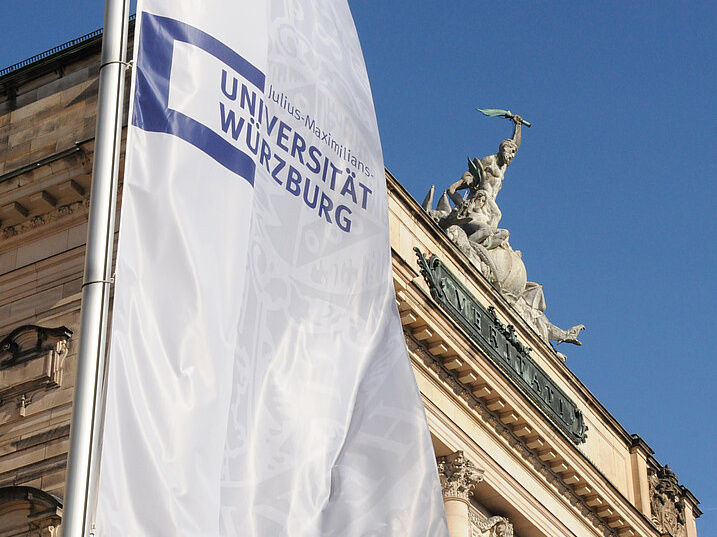
94 Patent Families at JMU: How They Are Expected to Lead to More Companies in the Region
Universität Würzburg
Life Sciences: Würzburg’s Strong Field of the Future
Diagnostics, medications, therapies, biotechnology, medical data, digital health, antibodies, CAR-T cells, and medtech products: the spectrum of life sciences inventions at JMU is broad. Patents are often crucial, especially in these areas. That’s because the path from research to application is long, expensive, and risky. New therapies, diagnostic procedures, or medical technology products require not only scientific excellence but also intellectual property rights, capital, entrepreneurial experience, strong partners, and spin-offs.
“Especially in the life sciences, robust patents are often a key prerequisite for enabling the long and capital-intensive development paths leading to practical application and market readiness. They are therefore of particular importance to JMU and to Würzburg as a hub for science and innovation,” explains Dr. Iris Zwirner-Baier, director of the SFT and a patent engineer at JMU.

Würzburg’s Research Gives Rise to International Biotech
CatalYm demonstrates just how great this potential can be. The biotech company emerged from Würzburg-based research in 2016. It is developing Visugromab, a new cancer immunotherapy. The underlying technology was developed and patented at JMU. In 2024, CatalYm closed a funding round of 150 million U.S. dollars to further advance clinical development.
This example shows that research from Würzburg can gain international relevance. But how can this happen more often? Patents are the first step toward establishing a company. This path is already evident at JMU: In 2024, three exclusive licensing agreements were signed, two of them with spin-offs.
“Patents only realize their economic and societal impact when protected research results are put into practice, whether through collaborations with companies, through licensing, or as part of a spin-off,” explains Zwirner-Baier.
Mainfranken must make better use of its opportunities
This presents a major opportunity for Mainfranken. When research more frequently leads to the creation of companies, it also generates new jobs, expertise, follow-on startups, and value creation in the region. But life sciences startups, in particular, need a lot of support early on. Development times are long, regulatory requirements are stringent, and clinical trials, product development, and market access all cost money before initial revenue is generated. This is where 14leafs—a venture capital fund initiated by JMU, Sparkasse Mainfranken Würzburg, and StellaVent Capital—comes in. This regionally based early-stage fund aims to support technology-oriented startups at an earlier stage. Its proximity to JMU and the regional technology transfer ecosystem is a key advantage: potential spin-offs can be identified, understood, and supported sooner.
“The SFT’s figures demonstrate the technological potential that exists in Würzburg,” says Prof. Dr. Axel Winkelmann, a partner at 14leafs and holder of the Chair in Business Administration and Information Systems at JMU. “Würzburg brings together research, technology transfer structures, and a growing entrepreneurial ecosystem within a compact area. This synergy provides excellent conditions for further developing scientific innovations beyond the university.”
Note: This article has been translated using a computer system without human intervention. LUMITOS offers these automatic translations to present a wider range of current news. Since this article has been translated with automatic translation, it is possible that it contains errors in vocabulary, syntax or grammar. The original article in German can be found here.



Other news from the department science









Most read news






More news from our other portals

















Something is happening in the life science industry ...
This is what true pioneering spirit looks like: Plenty of innovative start-ups are bringing fresh ideas, lifeblood and entrepreneurial spirit to change tomorrow's world for the better. Immerse yourself in the world of these young companies and take the opportunity to get in touch with the founders.