From smart sensor patches to wireless charging: Science4Life honors the year’s most innovative startup teams
First place in the Science4Life Venture Cup goes to SoreAlert, while Voltalyon wins the Science4Life Energy Award
Advertisement


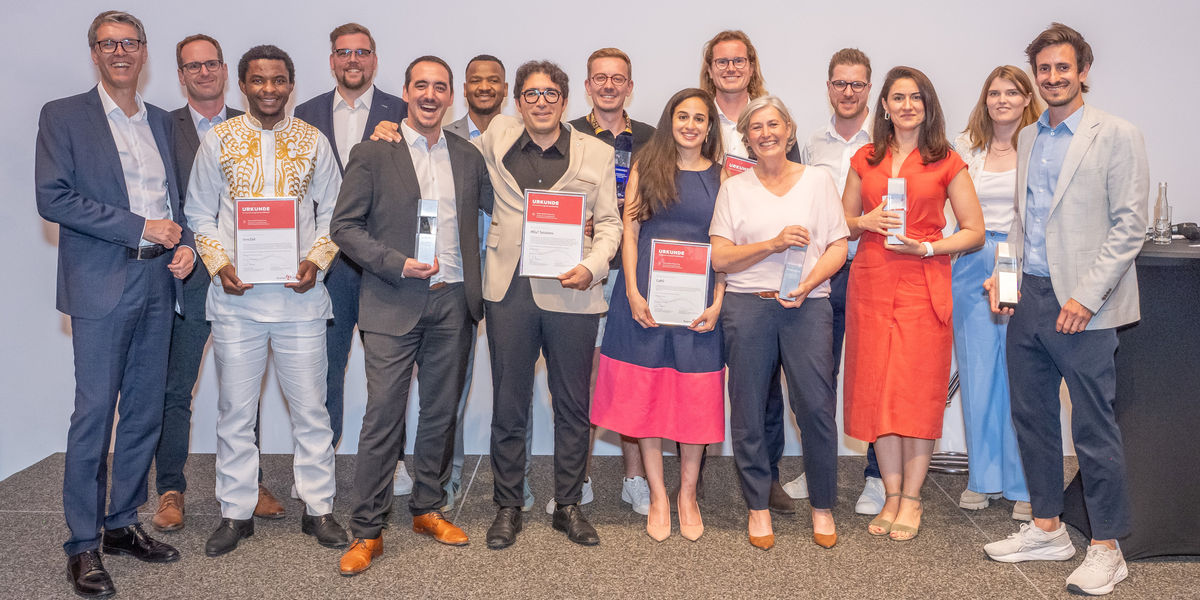
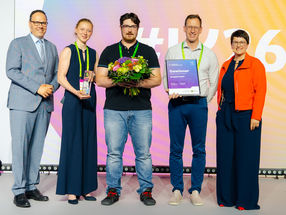
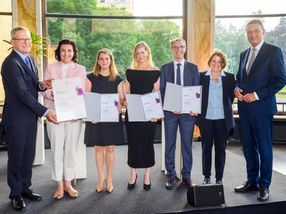
For the 28th time, the best business plans from the life sciences, chemistry, and energy sectors were recognized as part of the Science4Life Startup Competition. These are solutions that support patients in their daily lives, replace animal testing, detect production errors in real time, or advance electromobility in logistics. Above all, however, these ideas demonstrate the strength of the local startup ecosystem in science and research. From among 83 submissions, the five best teams from the life sciences and chemistry sectors were honored with the Science4Life Venture Cup, and the best team from the energy sector received the Science4Life Energy Award at the Reinhard Ernst Museum in Wiesbaden.
Dr. Johannes Loheide, State Secretary of the Hessian Ministry of Economics, Energy, Transportation, Housing, and Rural Affairs, praised the award-winning teams: “These founders have everything it takes to build a strong economy: innovative, scientifically sound ideas, dedication, and courage. We look forward to seeing these ideas turn into companies.” Heidrun Irschik-Hadjieff, Chair of the Executive Board of Sanofi in Germany, emphasized the immediate added value of the award-winning innovations: “What particularly impresses me about the startup teams is the determination with which they translate science and technology into benefits for patients. Whether it’s a periodontitis app, rheumatism diagnostics, or more precise wound care—these are solutions that make people’s everyday lives significantly easier.”
The Most Promising Ideas from Life Sciences and Chemistry
The winner of the Science4Life Venture Cup is SoreAlert from Munich. The team is developing a smart sensor patch for pressure ulcer prevention in people with limited mobility. As a spin-off from Fraunhofer EMFT, the team is, for the first time, quantifying the effects of all risk factors on the risk of pressure ulcers, thereby enabling precise wound prevention and automatically documenting it. This improves the quality of life for those affected and saves nursing time.

Second place went to iNSyT Solutions from Munich for its innovative quality control system for nanomaterials. Instead of merely measuring average values, the technology analyzes thousands of individual nanoparticles in real time, revealing hidden deviations. This enables manufacturers to detect defective batches earlier, reduce scrap, and make production decisions more quickly. The target audience includes manufacturers of quantum dots and other advanced nanomaterials, as well as companies in the fields of displays, energy, chemicals, coatings, and biotech.
InnoZell, based in Konstanz, develops designer cells that replace animal testing, earning it third place. The product “CellAlarm” is a cell-based early-warning system that, like the human body, detects traces of foreign substances (e.g., bacteria) extremely quickly and reliably. With this bio-detector, medications and medical devices can be tested and monitored quickly, easily, and with minimal effort—cost-effectively and entirely without animal testing.
Fourth place goes to CaRO from Weilburg. The team is developing the first prescription-based app for patients with periodontitis. Between dental appointments, it supports patients in their daily lives with personalized guidance, reminders, and in-depth information delivered directly to their smartphones.
MEDIRION from Duisburg takes fifth place and uses sensor systems and deep learning methods for the early detection of rheumatoid arthritis. The goal: to reduce the waiting time for rheumatology patients from the current 9 months to a 10-minute diagnosis, thereby enabling treatment before the disease becomes chronic.
Voltalyon Wins the Science4Life Energy Award
The Science4Life Energy Award honors the best submission from the energy sector and goes to Voltalyon. The Hamburg-based team solves a problem that is clearly visible in every logistics depot in Germany: electric vehicles sit uncharged because no one thought to plug them in, the van wasn’t positioned precisely at the designated charging station, or there simply weren’t enough cables available. As commercial vehicle fleets are being electrified in accordance with EU mandates, this coordination effort is becoming one of the largest hidden cost factors in logistics—estimated at 350 million euros per year in Germany alone. Voltalyon uses wireless infrastructure that charges every electric vehicle within range as soon as it parks.
The winners of the business plan phase of the Science4Life Venture Cup 2026
- First place, with a prize of 25,000 euros, goes to SoreAlert
- Second place, with a prize of 10,000 euros, goes to iNSyT Solutions
- Third place, with a prize of 5,000 euros, goes to InnoZell
- Third place, with a prize of 3,000 euros, goes to CaRO
- Second place, with a prize of 2,000 euros, goes to MEDIRION
The winner of the business plan phase of the Science4Life Energy Award 2026
The Science4Life Energy Award, worth 5,000 euros, goes to Voltalyon.
Note: This article has been translated using a computer system without human intervention. LUMITOS offers these automatic translations to present a wider range of current news. Since this article has been translated with automatic translation, it is possible that it contains errors in vocabulary, syntax or grammar. The original article in German can be found here.


Other news from the department business & finance








Most read news










More news from our other portals


















Something is happening in the life science industry ...
This is what true pioneering spirit looks like: Plenty of innovative start-ups are bringing fresh ideas, lifeblood and entrepreneurial spirit to change tomorrow's world for the better. Immerse yourself in the world of these young companies and take the opportunity to get in touch with the founders.