Drug Discovery Using Virtual Patients
Researchers at Sanofi are creating digital twins
Advertisement


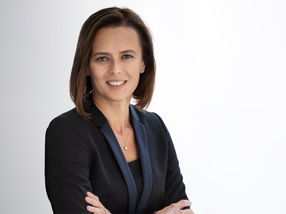
An estimated five to eight percent of people in Germany suffer from an autoimmune disease such as asthma, rheumatoid arthritis, or inflammatory bowel disease. Developing new drugs to treat these conditions is a lengthy and complex process. To significantly accelerate research, Markus Rehberg works at the intersection of engineering, mathematics, and biology. He and his team create so-called virtual patients to model the effectiveness of new drugs before they are tested in clinical trials.
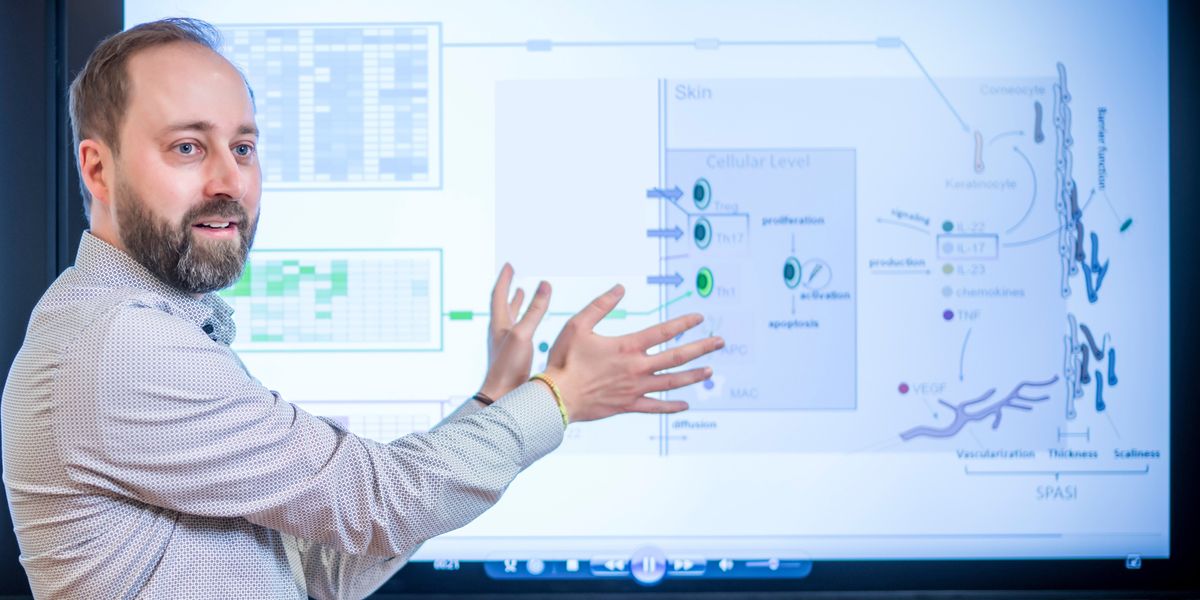
“Biology has always fascinated me, especially the fact that even the tiniest organisms, such as microbes, can perform complex tasks that robots and modern electronics still fail at,” says Markus Rehberg. The engineer, who holds a Ph.D., works in the field of disease modeling within the Translational Medicine Unit (TMU) at the Sanofi BioCampus in Frankfurt. There, he develops so-called “Quantitative Systems Pharmacology (QSP)” models.
These models map human pathophysiological processes in detail, from the molecular level all the way up to complex tissue structures. “You can think of it as a system of equations that describes chemical and cellular processes,” explains Rehberg. Using anonymized patient data, the models are then tailored to individual disease courses and refined. “It’s a labor-intensive process, but it allows us to understand biological relationships and the differences between patients,” explains the engineer.
After completing his engineering degree, Rehberg earned his Ph.D., researched cellular metabolism using mathematical models, and then decided to pursue drug research, as he says: “I am convinced that we can decipher biological systems more comprehensively using concepts from engineering.” "That’s what led me from basic research to applied drug development."
From virtual patients to real drugs
At the BioCampus, the engineer heads the QSP division. His team brings together diverse expertise: biology, mathematics, and computer science. "We are scientists, analysts, and developers all at once," he explains. "This versatility isn’t just unique—it also reflects our response to scientific demands and makes our daily work exceptionally varied." This combined expertise flows into the development of virtual patients. Once these are created, the team can test a wide variety of different active ingredients on the computer, model their effects, and help make the right decisions.
The QSP team is already researching a wide variety of drugs in close collaboration with other departments in Research and Development in Frankfurt. This provides feedback on whether, for example, the half-life, binding to the target molecule, or the dosage of an active ingredient should be adjusted to achieve the greatest possible effect in as many patients as possible. To do this, the team draws on a large amount of data from many different sources: ranging from simple binding data and biomarker analyses from the lab to its own and external clinical trials. “This requires precise coordination with all involved departments and can only be achieved through good collaboration and a shared goal: helping patients,” explains Rehberg. Close collaboration with on-site experts is an indispensable foundation of this work.
The research team began using artificial intelligence specifically for its work at an early stage. AI helps analyze datasets, review and optimize model structures, and generate virtual patients. This enables more robust and meaningful predictions.
In cooperation with leading AI research institutes, the team is also working to combine QSP models with the latest AI methods. "The goal is to integrate additional factors such as comorbidities and demographic factors into the models to represent individual patients even more precisely as digital twins," explains Markus Rehberg.
The successful integration of high-resolution single-cell data—specifically, single-cell RNA sequencing—into the creation of virtual patient twins is a significant step toward consistently testing molecules on the computer first, following the “In Silico First” principle. "This allows us to analyze complex diseases to an unprecedented degree," says Rehberg. "All data and findings are continuously fed into our databases so that we can further optimize our models and leverage our knowledge of the immune system to create future virtual patients."
These findings can help identify particularly promising active compounds at an early stage and accelerate development through optimized study designs. “Looking ahead, medicine will become increasingly personalized and, as a result, even more efficient in the form of precision medicine. QSP models and virtual patient twins could make a decisive contribution to clinical implementation by helping to tailor therapies precisely to individual patients," Rehberg summarizes.
Note: This article has been translated using a computer system without human intervention. LUMITOS offers these automatic translations to present a wider range of current news. Since this article has been translated with automatic translation, it is possible that it contains errors in vocabulary, syntax or grammar. The original article in German can be found here.



Other news from the department research and development