How we can better understand producer cell lines and make them more efficient in production
Advertisement


Lentiviral vectors have become an integral part of modern gene therapy, as they enable cells to be permanently altered - regardless of whether these cells are currently dividing or not. To produce these helpful viruses, many research laboratories use special cell lines that permanently contain the necessary viral genes.
This method is not only more reliable, but also more efficient than the parallel transfection of the necessary genes on individual DNA strands. However, little is known about how the cells change when the viral genes are permanently incorporated and active in them.
Professor Dr. Kerstin Otte's research team at Biberach University of Applied Sciences (HBC) is focusing on precisely such questions: How can we better understand producer cell lines and make them more efficient in production?
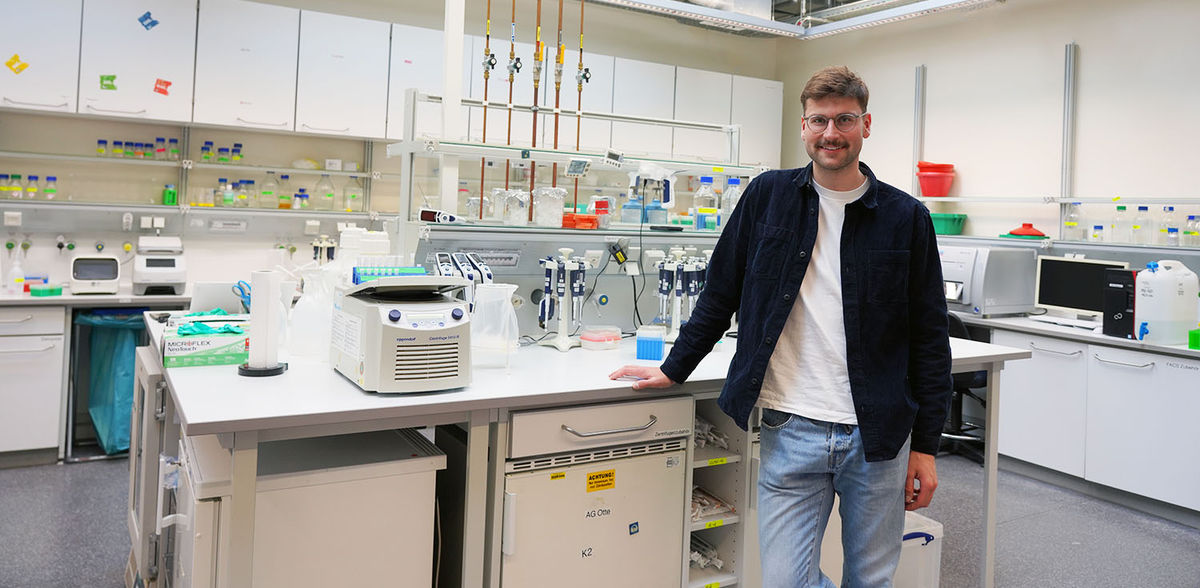
Six doctoral students are researching how cell lines can be optimized in their own doctoral projects. One of them is Jona Röscheise (28). The natural scientist first completed his Bachelor's and Master's degree in Pharmaceutical Biotechnology at HBC, the latter in cooperation with the University of Ulm. Even then, he was already working on issues in this field of research - after graduating, he continued this work seamlessly at the Institute of Applied Biotechnology at HBC.
In his current study, he is comparing a cell line that continuously produces lentiviruses after genetic modification with the same cell line without genetic modification and vector production. His aim is to use the differences to develop approaches for optimized virus production. "The initial results show clear differences in the gene activity of the two cell lines," reports the doctoral student. For example, some virus genes, such as the viral Gag-Pol gene, which is responsible for structural proteins and important enzymes of the virus, suppress the cell's ability to produce new proteins. Another gene responsible for controlling the transport of viral building blocks within the cell (Rev) or the versatile envelope protein that facilitates the uptake of viruses into many cell types (VSV-G), on the other hand, influence energy production in the mitochondria, the "power plants" of the cell, as Jona Röscheise describes them. The so-called Tat gene in turn activates genes that are involved in the packaging of genetic information.
Röscheise has discovered that viral genes specifically reprogram the cells in order to create optimal conditions for virus production. "This apparently happens at the expense of the cells' natural tasks, such as defense against diseases," explains the doctoral student.
With his doctorate, Jona Röscheise wants to contribute to a better understanding of the molecular processes in the production cells. In the long term, these findings could help to further optimize the production of lentiviral vectors for gene therapy, says the biotechnologist.
His doctoral supervisor Kerstin Otte has been researching the topic of cell lines for 15 years; she has accumulated an enormous amount of knowledge over many projects and doctorates and can advise companies that encounter problems in their production, for example, by combining and developing solutions from other cases. This transfer is an important task for the researchers at the IAB.
"Our research aims to understand the molecular mechanisms in production cell lines. This is the only way we can improve the efficiency and safety of gene therapy in the long term and at the same time gain valuable knowledge for teaching and transfer," says Otte. Students at the Faculty of Biotechnology also benefit from research at the HBC. Students on the Bachelor's degree course in Medical Biotechnology in particular, which started this winter semester, acquire the methodological and theoretical foundations that Jona Röscheise also needed for his doctoral project in the field of cell line research.
This is because the course focuses on the development and application of biotechnological processes in medicine, particularly for the diagnosis, treatment and research of diseases. Cell cultures and cell lines are a central field of work here, explains Kerstin Otte, who is also the Dean of Studies for the new course. Like the doctoral projects in the field of cell lines, students work on the development, optimization or application of cell lines, for example for the production of biopharmaceuticals, gene therapeutics or for basic research into cell functions. Teaching, research, transfer: the Faculty of Biotechnology covers all scientific areas, which is precisely why Jona Röscheise values the collaboration with his colleagues. He also sees the intensive supervision provided by his doctoral supervisor Prof. Dr. Kerstin Otte as a major advantage. "While postdocs often take over the main supervision at other institutes, we have the personal exchange that promotes our scientific development enormously," says Jona Röscheise. In addition, the weekly lab meetings provide a valuable platform for feedback and new ideas.
Note: This article has been translated using a computer system without human intervention. LUMITOS offers these automatic translations to present a wider range of current news. Since this article has been translated with automatic translation, it is possible that it contains errors in vocabulary, syntax or grammar. The original article in German can be found here.


Other news from the department science












Most read news







More news from our other portals












See the theme worlds for related content
Topic world Gene therapy
Genetic diseases once considered untreatable are now at the center of innovative therapeutic approaches. Research and development of gene therapies in biotech and pharma aim to directly correct or replace defective or missing genes to combat disease at the molecular level. This revolutionary approach promises not only to treat symptoms, but to eliminate the cause of the disease itself.

Topic world Gene therapy
Genetic diseases once considered untreatable are now at the center of innovative therapeutic approaches. Research and development of gene therapies in biotech and pharma aim to directly correct or replace defective or missing genes to combat disease at the molecular level. This revolutionary approach promises not only to treat symptoms, but to eliminate the cause of the disease itself.