How a Laboratory Error Could Help with Rare Earth Recycling
Mario Markus Prize for Game Sciences: Back-synthesized peptides bind lanthanides about ten times more strongly
Advertisement


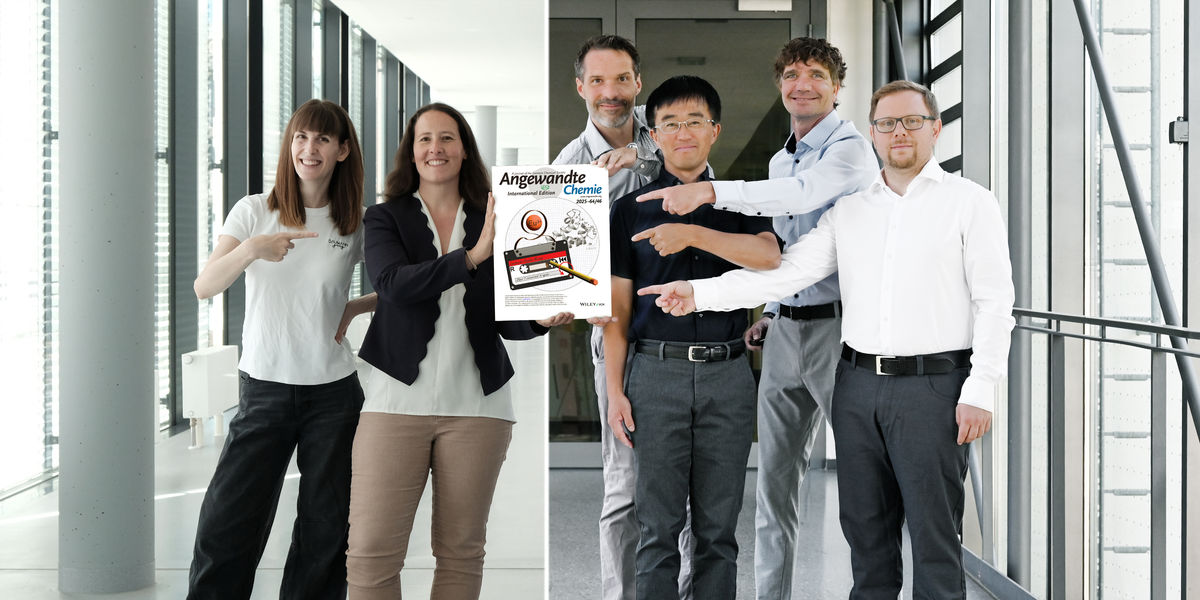
The German Chemical Society (GDCh) is honoring six researchers from Heinrich Heine University Düsseldorf (HHU) and the Helmholtz Center Dresden-Rossendorf (HZDR) with the Mario Markus Prize for Ludic Sciences. The honorees are Professor Dr. Lena Daumann and Dr. Sophie Marie Gutenthaler-Tietze from HHU, as well as Dr. Björn Drobot, Dr. Jérôme Kretzschmar, Dr. Robin Steudtner, and Professor Dr. Satoru Tsushima from HZDR. The team is receiving the prize, worth 10,000 euros, for a discovery that resulted from a laboratory error: peptides built in reverse order bind lanthanides—a group of rare earth elements—significantly more strongly than their natural counterparts. The discovery could help recover rare earth elements in a more environmentally friendly way. The award ceremony will take place on December 15, 2026, in Frankfurt am Main.
The Mario Markus Prize honors scientific work that stands out for its playful nature. The award-winning study was published in 2025 in the GDCh journal *Angewandte Chemie International Edition*. Its journey to publication began with a laboratory error and several years in the freezer, leading to a surprise.
Daumann and Gutenthaler-Tietze wanted to understand how bacteria capture rare earth elements. To do so, they recreated the metal-binding segments of the bacterial protein lanmodulin as peptides—that is, as short amino acid chains. However, due to a lack of experience, they accidentally assembled the first peptide in the reverse order. They noticed the error, and the peptide remained frozen for years.
Later, curiosity got the better of them. The team wanted to know whether the order even mattered if the number and spacing of the binding amino acids were correct. Together with colleagues from the HZDR, they investigated the thawed peptide and three other reversed variants.
The result surprised everyone: Three of the four reversed peptides bound lanthanides about ten times more strongly than the peptides in their natural order. The fourth initially showed no advantage. However, after replacing a single amino acid, this very peptide bound as strongly as peptides of this length rarely do.
This serendipitous discovery could also have practical significance. The 17 rare earth metals are found in wind turbines and smartphones, among other things. Their mining harms the environment, and environmentally friendly recycling processes are lacking. Furthermore, these chemically very similar metals are extremely difficult to separate from one another.
The results open up new avenues for selectively binding and separating lanthanides. The jury commends the original approach, the high scientific merit, and the playful nature of the work.
About the award recipients:
Prof. Dr. Lena Daumann has been a W3 Professor of Bioinorganic Chemistry at Heinrich Heine University Düsseldorf since 2023. Previously, she was a professor at LMU Munich. She studied chemistry at Heidelberg University and earned her Ph.D. from the University of Queensland in Brisbane. Among other honors, she received an ERC Starting Grant.
Dr. Sophie Marie Gutenthaler-Tietze has been a postdoctoral researcher at Heinrich Heine University Düsseldorf since 2025. She studied chemistry and biochemistry at LMU Munich and earned her Ph.D. there in 2025. Her dissertation was awarded the LMU Römer Prize.
Dr. Björn Drobot has headed the Biophysics Department at the Institute of Resource Ecology at the HZDR since 2026. He studied biophysics at Humboldt University in Berlin and earned his Ph.D. in radiochemistry at TU Dresden.
Dr. Jérôme Kretzschmar is a research associate at the Institute of Resource Ecology at the HZDR, where he is responsible for NMR spectroscopy of aqueous systems. He studied chemistry at the TU Bergakademie Freiberg and earned his Ph.D. from the TU Dresden.
Dr. Robin Steudtner has headed the Spectroscopy and Speciation of f-Elements Group at the Institute of Resource Ecology at HZDR since 2025. He studied chemistry at Zittau/Görlitz University of Applied Sciences and earned his Ph.D. from the Technical University of Dresden.
Professor Dr. Satoru Tsushima is a Senior Scientist at the Institute of Resource Ecology at HZDR and an Adjunct Professor at the Institute of Science Tokyo. He studied engineering at the University of Tokyo and earned his Ph.D. in nuclear engineering there.
Note: This article has been translated using a computer system without human intervention. LUMITOS offers these automatic translations to present a wider range of current news. Since this article has been translated with automatic translation, it is possible that it contains errors in vocabulary, syntax or grammar. The original article in German can be found here.
Original publication


Other news from the department science