Bavaria’s biotech industry continues to grow
Record funding and start-up boom despite a challenging environment
Advertisement


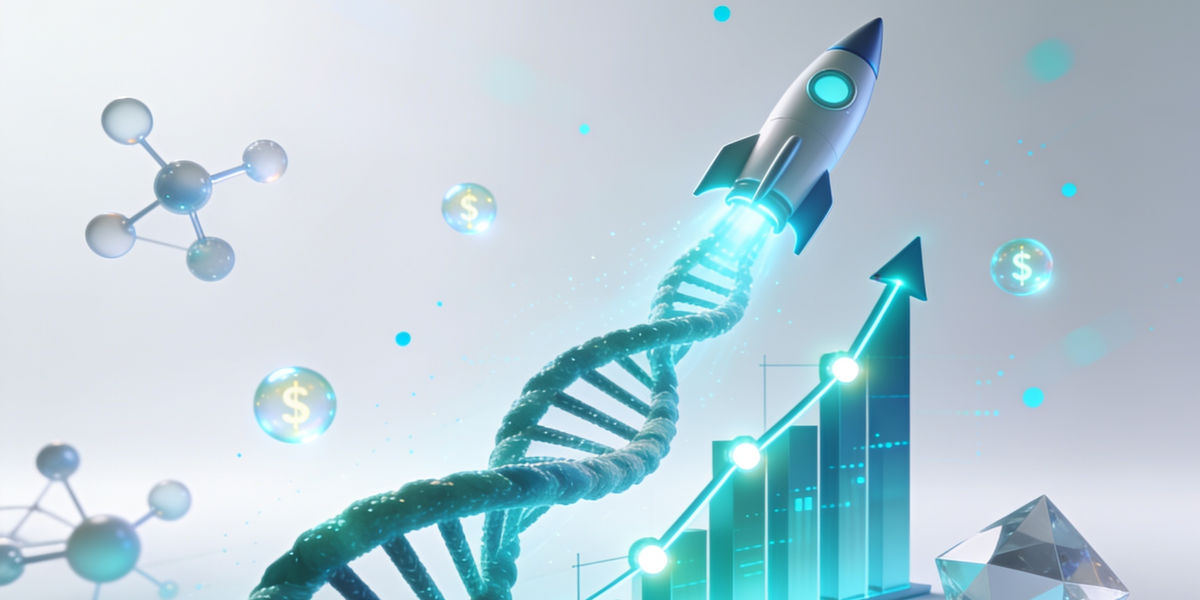
Bavaria’s biotechnology sector continues its growth trajectory. Despite a challenging global market environment, the number of companies in Bavaria’s biopharma sector increased to 548 (+1,5%) in 2025. At the same time, 26 new start-ups were founded (+62,5%) while funding and financing reached a new record high of more than EUR 930 million. These are among the key findings of the new annual report “Biotech in Bavaria 2025/26 – Where champions grow”, presented by BioM in Martinsried.
Record number of start-ups and stable business development
The number of companies in the Bavarian biopharma sector rose to 548 in 2025, an increase of eight companies compared to the previous year. Growth was driven in particular by biotechnology and life sciences companies. A total of 26 new start-ups were founded (+62,5%), and three additional companies relocated to Bavaria.
This marks the continuation of a clear upward trend: Following ten new start-ups in 2023 and 16 in 2024, 2025 set a new record. This development underscores Bavaria’s appeal as a leading hub for biotechnology innovation in Europe.

Employment also showed positive growth. The number of employees in the biopharma sector rose by 3.5% to approximately 59,000. Larger biotech companies, particularly, continued to expand their teams.
Record financing of over EUR 930 million
Bavarian biotech companies raised more than EUR 930 million in funding in 2025. This figure surpassed the already high total from the previous year – contrary to the national trend of declining funding. Since 2023, the volume of funding has nearly doubled.
Biotech champion Tubulis closed the year’s largest funding round with a Series C financing of EUR 344 million. In April 2026, the Munich-based company was acquired by the U.S. pharmaceutical giant Gilead for up to USD 5 billion – impressive proof of the international competitiveness of Bavarian biotechnology.
Other notable funding rounds included ITM, which secured up to EUR 231 million in debt financing; Nuclidium, which raised EUR 84 million in a Series B round; Formycon, which issued an oversubscribed corporate bond worth EUR 70 million; Immunic, which raised EUR 57 million; and AMSilk, which raised a total of EUR 52 million.
In the early-stage sector, five seed financings with a total volume of over EUR 21 million were announced. At the same time, the comparatively low number of larger Series A rounds indicates that financing growth companies remains a challenge.
Clinical pipeline remains strong
The development pipeline of Bavarian biotech companies remains robust. A total of 72 projects are currently in clinical development. The number of Phase II projects has grown particularly strongly, while the number of Phase I projects has also increased. The number of projects in Phase III, on the other hand, declined significantly, mainly due to the fact that several programs are listed as having an unknown status.
Oncology remains the most important indication, while the field of infectious diseases is gaining in importance. Bavarian Nordic achieved a particular success with FDA approval and European market authorization for its chikungunya vaccine.
“The figures clearly demonstrate the resilience and innovative strength of the Bavarian biotech ecosystem. The high number of start-ups and the steady progress of clinical projects are particularly encouraging. Bavaria offers excellent conditions for translating scientific excellence into successful companies and new therapies,” says Prof. Ralf Huss, Managing Director of BioM.
Investments worth billions are strengthening Bavaria as a business location
The site’s positive development is further supported by substantial investments in research and infrastructure. Roche is investing more than EUR 640 million in Penzberg to expand its diagnostics and sequencing capabilities, thereby creating around 200 new jobs. At the same time, the new Fraunhofer Center for Translational Medicine and Pharmacology in Penzberg is strengthening research into infectious diseases and immunology with nearly EUR 90 million in funding.
Further momentum is being provided by the Helmholtz Institute for RNA-Based Infection Research in Würzburg, which recently held a topping-out ceremony for a new research building funded by the Free State of Bavaria and the EU to the tune of around EUR 60 million.
The first phase of construction for the Max Planck Society’s new life sciences campus in Martinsried has been approved with a budget of EUR 361 million, underscoring the long-term commitment to expanding world-class research capabilities. The State of Bavaria is providing up to EUR 500 million for the entire project.
The industry is optimistic about the future
In a survey, BioM asked companies in the Bavarian Biotech Cluster about their current business situation and how they viewed the future of their companies. Despite ongoing economic and geopolitical challenges, sentiment in the industry remains positive. 63% of the companies surveyed rate their current business situation as good or very good, and 82% expect their business performance to improve further over the next three to five years.
Positive outlook for Bavaria's biotech ecosystem
The significant increase in new start-ups, the sector’s strong financing capacity, and ongoing investments in research and infrastructure all contribute to continued positive development for the region.
At the same time, strengthening early-stage and Series A financing will be crucial to nurturing the next successful growth companies from among the numerous start-ups. Additional momentum could result from the future from the planned European Biotech Act, which is intended to strengthen the competitiveness of European biotechnology.



Other news from the department business & finance













Most read news









More news from our other portals












See the theme worlds for related content
Topic world Diagnostics
Diagnostics is at the heart of modern medicine and forms a crucial interface between research and patient care in the biotech and pharmaceutical industries. It not only enables early detection and monitoring of disease, but also plays a central role in individualized medicine by enabling targeted therapies based on an individual's genetic and molecular signature.

Topic world Diagnostics
Diagnostics is at the heart of modern medicine and forms a crucial interface between research and patient care in the biotech and pharmaceutical industries. It not only enables early detection and monitoring of disease, but also plays a central role in individualized medicine by enabling targeted therapies based on an individual's genetic and molecular signature.