German government publishes technology roadmaps for six key technologies
Strengthening competitiveness, value creation and technological sovereignty
Advertisement


The Federal Cabinet has presented the roadmaps for the key technologies of the High-Tech Agenda Germany (HTAD). The HTAD is the German government's central innovation policy project to strengthen competitiveness, value creation and technological sovereignty. Since it was adopted less than a year ago, almost half of the 76 flagship measures have already been launched. With the published technology roadmaps, the Federal Government is taking the next step towards implementing the HTAD.
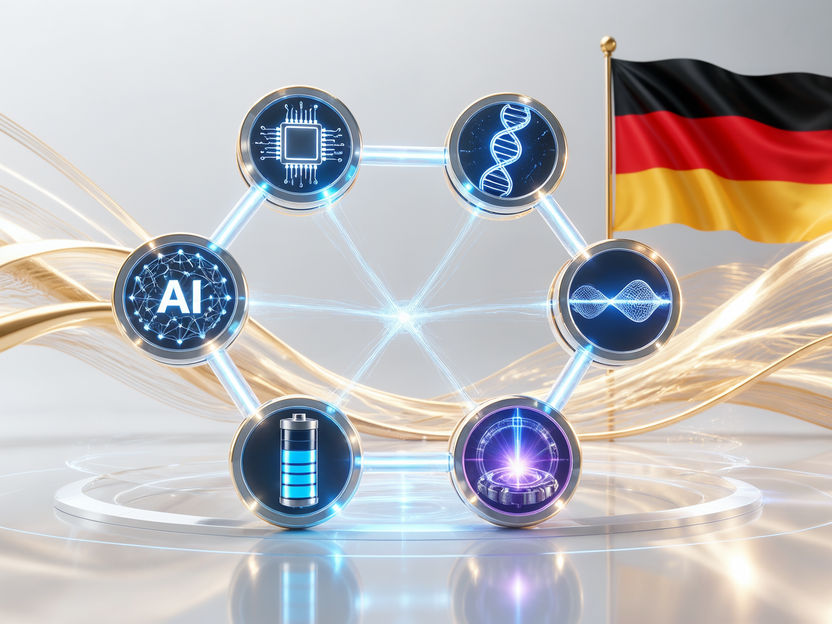
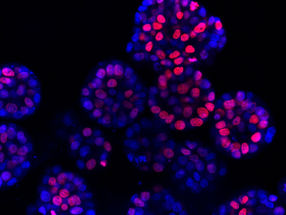
Symbol image
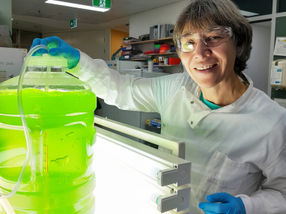
AI-generated image
Dorothee Bär, Federal Minister of Research, Technology and Space, explains: "With the High-Tech Agenda Germany, we are bringing high-tech 'Made in Germany' back to the forefront. New technologies and innovations open up enormous opportunities for growth, prosperity and progress. We must seize this opportunity with determination. The focus here is on the six priority key technologies that are decisive for the future viability of our country. With the technology roadmaps published today, we are presenting a joint roadmap for each key technology. Whether for modern chips, better cancer therapies or clean energy from fusion - cutting-edge technology - we need to translate our excellent research even faster into innovations, new technologies, economic strength and international competitiveness. This can only be achieved together: science, business, politics and society must pull together. The HTAD points the way forward. It is a participatory agenda. I invite everyone to play an active role in shaping the HTAD."
Federal Minister for Economic Affairs and Energy Katherina Reiche explains: "In international competition, it is no longer just the quality of research that is decisive today, but the speed of its implementation. Germany must translate innovation into industrial strength more quickly - especially in key technologies such as energy, batteries and microelectronics. If you want to remain technologically sovereign, you have to enable innovation, mobilize investment and reduce bureaucracy. This is exactly what we are working on."
Federal Digital Minister Dr. Karsten Wildberger explains: "Artificial intelligence is the greatest opportunity of our time to completely redefine prosperity, progress and innovation. We must not only make broad use of AI, but also develop it ourselves - and we have everything we need for this: bright minds, world-class research, an extremely strong SME sector and a dynamic start-up scene. With the AI roadmap, we are joining forces and accelerating the implementation of the high-tech agenda."
Federal Minister of Labor Bärbel Bas explains: "Artificial intelligence offers great opportunities for the economy and the world of work. It is crucial that we use these opportunities in such a way that good work is preserved and new prospects are created. That is why we have anchored key topics in the AI roadmap: good jobs and working conditions, co-determination and participation as well as the development of AI skills across the breadth of the working society. After all, technological progress is real progress if as many people as possible benefit from it."
Federal Minister of Transport Patrick Schnieder explains: "We can only make transport more sustainable and future-proof if we bring the technologies of tomorrow onto the roads, into the air and onto the water together. With HTAD, we are creating a strong joint platform for this: here we are pooling the strengths of the most important future technologies in order to strengthen Germany's competitiveness and promote climate-neutral mobility. With a master plan for hydrogen and electricity-based fuels in transport, we are now laying down the roadmap for the ramp-up of these technologies. At the same time, we are investing in research, development and the market activation of new drive solutions - especially where climate neutrality is particularly challenging: in heavy commercial vehicles and in aviation and shipping. In this way, we are building bridges to a climate-neutral future for transport - open to technology, innovative and with a clear course."
Federal Minister of Health Nina Warken explains: "Biotechnology and artificial intelligence are key technologies for the medicine of the future. They open up new opportunities to develop innovative drugs faster and in a more targeted manner and to identify and treat life-threatening diseases earlier. With the High-Tech Agenda Germany, we are creating the conditions for these potentials to be used more effectively in research and healthcare - safely, responsibly and in the interests of patients. Together with partners from science, research and healthcare, we are thus strengthening prevention and resilience in our healthcare system."
Alois Rainer, Federal Minister of Agriculture, Food and Home Affairs, commented: "Particularly in the areas of AI and biotechnology, the High-Tech Agenda Germany offers a wide range of points of contact for the research institutions in my portfolio and, of course, the agricultural, food and nutrition industries. They make their contribution when it comes to strengthening Germany's competitiveness and technological sovereignty as a location for innovation and technology. The main beneficiaries of this will be the rural areas in which the players in the agricultural, food and nutrition industries are predominantly located. This is how we secure jobs and a future for our homeland."
Karin Prien, Federal Minister of Education, Family Affairs, Senior Citizens, Women and Youth, commented: "The High-Tech Agenda Germany and the roadmaps presented here show how we can all become shapers of high technologies and innovation and thus of the world of tomorrow. Key technologies such as artificial intelligence have the potential to decisively change the way we live together and our everyday lives. It is important to further develop AI technologies in line with our fundamental social values and to empower children and young people in particular to use them critically. To make this possible, we want to reach a broad section of society with our education and AI skills measures and strengthen STEM skills in the educational republic of Germany."
Background
The High-Tech Agenda Germany is the German government's central innovation policy project. It focuses on six key technologies that are crucial to Germany's competitiveness, economic strength and sovereignty: Artificial intelligence, quantum technologies, microelectronics, biotechnology, fusion and climate-neutral energy generation as well as technologies for climate-neutral mobility. In addition, there are five strategic research fields and overarching levers to strengthen the innovation ecosystem.
In order for the investments in HTAD to have an impact, a common orientation framework is required. With the technology roadmaps presented today, the Federal Government is taking a decisive step in this direction. The roadmaps create transparency and make the political objectives tangible. They integrate the federal government's flagship measures that are already underway, contributions from the federal states, define milestones and identify catalysts and framework conditions. In this way, they pool the efforts of the various stakeholders and accelerate implementation.
Development of the roadmaps: The HTAD roadmaps are based on 26 partner dialogs that the Federal Government held in the key technologies from January to April 2026. Representatives from ministries, federal states, science, industry and other stakeholders discussed the technology-specific development paths together during this period.
Based on this, the roadmaps were developed in close coordination across ministries (responsible for content: BMFTR, BMWE, BMDS, BMAS, BMV; contributors include BMG, BMLEH, BMBFSFJ). The roadmaps are now to be jointly implemented and regularly updated with stakeholders from industry and science as well as the federal states.
What are the specific benefits of the roadmaps: Examples from the key technologies:
- Artificial intelligence: together with European partners, Germany is to become the world's leading AI location and lead market for industrial AI applications and AI-based robotics. With the "AI Robotics Booster", the BMFTR 2026 is setting an independent focus on embodied AI.
- Microelectronics: The roadmap is largely based on the "Federal Government's Microelectronics Strategy", which was jointly developed by the BMWE and BMFTR and adopted by the Federal Cabinet in October 2025. The core objectives are to expand chip design capabilities in Germany, accelerate the transfer from the research laboratory to industrial implementation, further expand market share in the growing chip market and increase the resilience of supply chains. New chip factories, pilot lines and the tendered chip design competence center are intended to make Germany the European center for chip design.
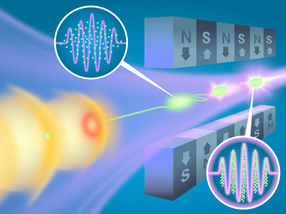
- Quantum technologies: We want to realize two error-corrected quantum computers at European top level by 2030. Quantum sensors are to be introduced into medical applications by 2030 - for example for the early detection of diseases long before visible symptoms appear. Quantum communication - from research satellites to quantum repeaters in fiber optic networks - will put cyber security on a new, physics-based footing.
- Biotechnology: By 2028, the first mRNA cancer immunotherapy tailored to the individual patient's tumor is to be approved. In the same year, the Berlin Center for Gene and Cell Therapies opens, which the BMFTR will support with up to 100 million euros until 2035 and in which up to 20 start-ups can work on new therapies in parallel.
- Fusion: The world's first commercial fusion power plant is to be built in Germany. This is already creating added value and jobs in laser, magnet and materials research.
- Battery: With the battery cell research production facility in Münster, a functional lithium-ion battery cell was produced for the first time in December 2025 on the basis of an end-to-end European process chain. New cell chemistries such as sodium-ion batteries reduce critical dependencies on raw materials.
What happens next: The roadmaps are expressly designed as living working documents. They will be further developed together with implementation partners, stakeholders and the public. The activated online consultation is the central format for this. Further roadmaps are being planned; for example, the process for the hydrogen roadmap has been launched.
Note: This article has been translated using a computer system without human intervention. LUMITOS offers these automatic translations to present a wider range of current news. Since this article has been translated with automatic translation, it is possible that it contains errors in vocabulary, syntax or grammar. The original article in German can be found here.


Other news from the department politics & laws