The chemical-pharmaceutical industry is on a difficult path
Total sales down 1 percent compared to the previous year
Advertisement


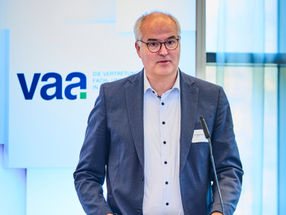
Germany's industry has had an exhausting year. The situation for chemical and pharmaceutical companies has also worsened. "The industry is sending out an SOS. 2025 was another very difficult year for our sector and the outlook for the future is not getting any rosier," says Markus Steilemann.
In view of the severe economic crisis, the President of the German Chemical Industry Association (VCI) is calling for a united front in the country and a consistent look ahead: "Germany still has a lot of potential. Everything must now be done to ensure that even more substance is not lost. Companies' efforts to ensure a good future in Germany must pay off. To achieve this, we finally need the right, reliable framework conditions. Above all, fewer rules and lower costs."
A look at the annual figures for the chemical-pharmaceutical industry shows the challenging situation: production and producer prices in the sector are slightly down on the previous year (-0.5%). Turnover fell by one percentage point. In the chemical industry, production fell by 2.5%. The drop in turnover in Germany and abroad is 3 percent.
Production facilities are only operating at 70 percent capacity - a historic low and a far cry from profitability. Every second company has too few orders. These have slumped by more than 20% in Germany and abroad since 2021.
Pharma has recorded a 3% increase in production this year and an increase in turnover of more than 4%. However, the current business situation has also deteriorated significantly here and is now in negative territory.
The crisis is reflected in the number of employees: a fall of 0.5 percent this year means 2,400 fewer people working in the chemical-pharmaceutical industry. Plant closures and production relocations that have already been announced will lead to further job cuts.
The VCI expects production in the chemical-pharmaceutical industry as a whole to stagnate next year, with a decline of 1 percent for the chemical industry. With falling prices and stagnating output, this means a drop in turnover of around 2 percent - both in Germany and in exports.
The negative sentiment is also confirmed by a representative VCI survey of member companies: 20 percent of respondents are planning to relocate their production or shut it down completely. One in ten companies is planning to close entire sites. More than 40 percent expect domestic sales to fall again. Almost every second company anticipates a further deterioration in earnings.
The general conditions in Germany are responsible for the pessimistic expectations: uncompetitive production costs, a high level of regulatory uncertainty and slow approval procedures. The industry is also struggling with bureaucracy, high energy prices and the cost of emissions and raw materials. The expensive euro, Chinese overcapacity, high US customs walls and geo-economic uncertainty are also putting a strain on business.
With a view to Berlin and Brussels, Markus Steilemann demands: "We can no longer afford confrontation. We must face up to unpleasant truths and look to the future. The transformation of our economy into a competitive and good future will demand a lot from us. It will be a difficult path, but we must take it. With the combined forces of politics, business and society."
In order for Germany and Europe to become fit for the future again, the VCI believes that these six points must be implemented
1. Secure production sites in strategically important sectors such as chemicals and pharmaceuticals: This will enable Germany to create independence, resilience and security of supply in Europe. This requires lower costs, fewer hurdles and faster decisions.
2. strengthen innovation: If you want to remain competitive, take climate protection seriously and exploit the opportunities of digitalization, you need to invest in research and development. At present, there is no political framework to prevent innovation from being nipped in the bud.
3. prioritize spending: Investing in the future means investing in education, research, infrastructure, digitalization and future technologies. This is the basis of a modern industrial policy.
4. courageous reforms: These are necessary for energy and climate policy, public authorities and social security systems. In this way, the competitiveness of the location can be restored and the transformation towards climate neutrality can be achieved.
5. a credible overall strategy: Germany needs clear priorities and a long-term plan. Our country needs an industrial policy that creates reliable framework conditions, promotes new technologies and modernizes infrastructures.
6. rethinking Europe: The European community can get on an equal footing with the USA and China. This requires a common industrial policy and defense, a capital market union and a completed single market.
Note: This article has been translated using a computer system without human intervention. LUMITOS offers these automatic translations to present a wider range of current news. Since this article has been translated with automatic translation, it is possible that it contains errors in vocabulary, syntax or grammar. The original article in German can be found here.



Other news from the department business & finance