Personalized cancer therapy with a "mini-tumour" and digital twin
Advertisement


Improving treatment recommendations for colorectal cancer patients: This is the aim of a collaborative project between the University of Bonn, the company ESQlabs and the University Hospital Bonn (UKB), funded by the Federal Ministry of Education and Research. "ISPOT-K" combines organoids derived from patients with digital twin technology.
Even if the diagnosis is the same, the course of colorectal cancer is never the same for patients: how the tumor spreads and which therapy and medication are effective varies from patient to patient.
Conventional cancer therapies are usually based on personal information such as age and gender, type and stage of cancer, histological information and selected genetic information. However, this information says nothing about how a patient will respond to treatment. This is where the team from the University of Bonn and ESQlabs comes in with a new idea: The "ISPOT-K" team combines organoid-based tests with computer-assisted modeling to generate a digital twin of each colorectal cancer patient in order to suggest the most effective therapy with the fewest side effects.
"Mini-tumors" as the basis for the digital twin
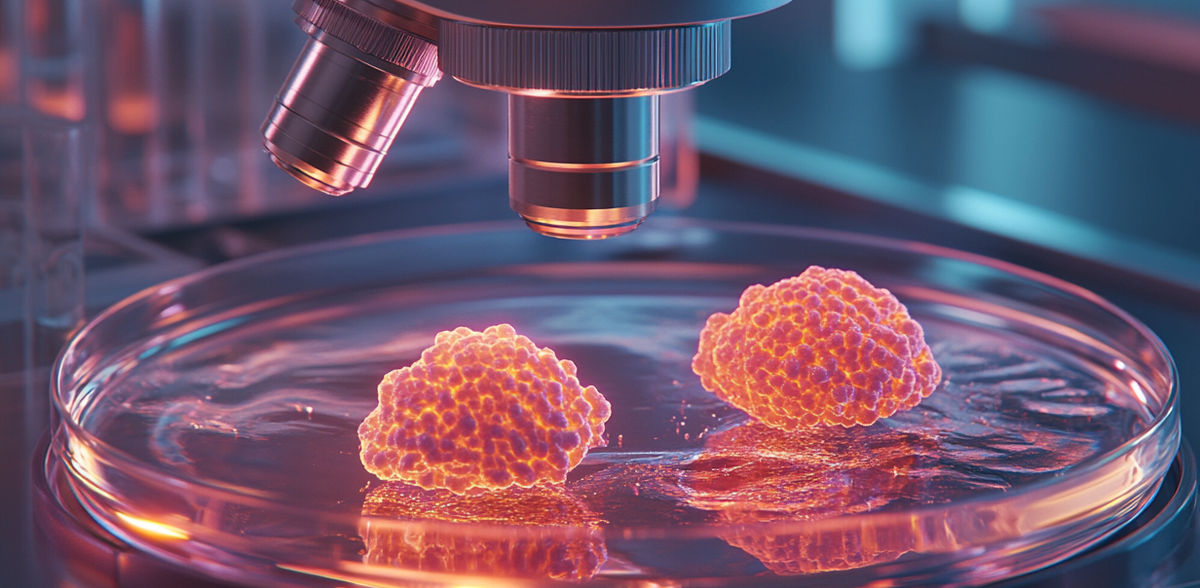
3D organoids are produced from tissue that is grown to mimic the structure and functionality of a human organ. At the LIMES Institute of the University of Bonn, the working group of Junior Professor Dr. Elena Reckzeh specializes in experimental organoid technology: it cultivates tumour tissue samples taken directly from colon cancer patients to produce 3D organoids in the laboratory. These "mini-tumors" are then exposed to various cancer drugs in order to predict how the patient will respond to the treatment. Patient recruitment is carried out in collaboration with Prof. Tim Vilz from the Department of Colorectal Surgery and Proctology at the University Hospital Bonn (UKB).
In a second step, the data from the 3D organoid is combined with detailed molecular and physical patient data. This computational modeling is carried out in the research groups of Prof. Dr. Jan Hasenauer led by Dr. Dilan Pathirana from the Bonn Center for Mathematical Life Sciences at the University of Bonn: They focus on modeling intracellular signaling pathways relevant to cancer, including drug responses and quantification of uncertainties. The research of the two working groups is located at the interface of the Transdisciplinary Research Areas (TRA) "Modeling" and "Life & Health" at the University of Bonn and also benefits from the clusters of excellence Hausdorff Center for Mathematics and ImmunoSensation2.
Digital twin for optimal dosage recommendations
ESQlabs / MPSlabs is responsible for integrating the data into the digital twin: The company specializes in quantitative system pharmacology, PBPK modelling and MPS-based digital twin solutions. The digital twin can then be used to simulate how the respective tumor would react to different treatments in order to recommend the optimal dosing strategy. "Our vision is a data-driven workflow that starts with testing organoids and ends with an in-silico simulation - essentially a 'virtual patient' that guides doctors to the most effective therapy," explains Dr. Christian Maass, project manager at MPSlabs/ESQlabs.
"ISPOT-K has the potential to revolutionize personalized therapy for colorectal cancer," explains Jun.-Prof. Elena Reckzeh. "We envision that this powerful combination will deliver the safest and most effective therapy tailored to each individual patient."
More effective treatments, less animal testing
The digital twin's patient-specific drug recommendations could reduce the cost of cancer treatment in the future by both reducing the use of ineffective generic therapies and identifying an adequate drug dosage for each patient. The findings from the digital twins on dosage, efficacy, toxicity and optimal drug combinations are also to be made available in a platform in order to optimize drug development. These findings could also help to reduce animal testing during drug development in the future, as some questions, such as toxic side effects or the lack of effective treatment, could already be answered in the laboratory and on the computer.
Funding and participating institutions
The project that has now been launched has a project volume of 1.7 million euros. The Federal Ministry of Education and Research is funding ISPOT-K with 1.1 million euros, of which the University of Bonn is receiving around 700,000 euros. In addition to the University of Bonn and ESQlabs, the University Hospital Bonn (UKB) is also involved.
Note: This article has been translated using a computer system without human intervention. LUMITOS offers these automatic translations to present a wider range of current news. Since this article has been translated with automatic translation, it is possible that it contains errors in vocabulary, syntax or grammar. The original article in German can be found here.



Other news from the department science










Most read news










More news from our other portals





















Something is happening in the life science industry ...
This is what true pioneering spirit looks like: Plenty of innovative start-ups are bringing fresh ideas, lifeblood and entrepreneurial spirit to change tomorrow's world for the better. Immerse yourself in the world of these young companies and take the opportunity to get in touch with the founders.