Artificial photosynthesis for environmentally friendly food production
Researchers produce important amino acid from greenhouse gas CO₂
Advertisement


Ensuring the supply of food to the constantly growing world population and protecting the environment at the same time are often conflicting objectives. Now researchers at the Technical University of Munich (TUM) have successfully developed a method for the synthetic manufacture of nutritional protein using a type of artificial photosynthesis. The animal feed industry is the primary driver of high demand for large volumes of nutritional protein, which is also suitable for use in meat substitute products.
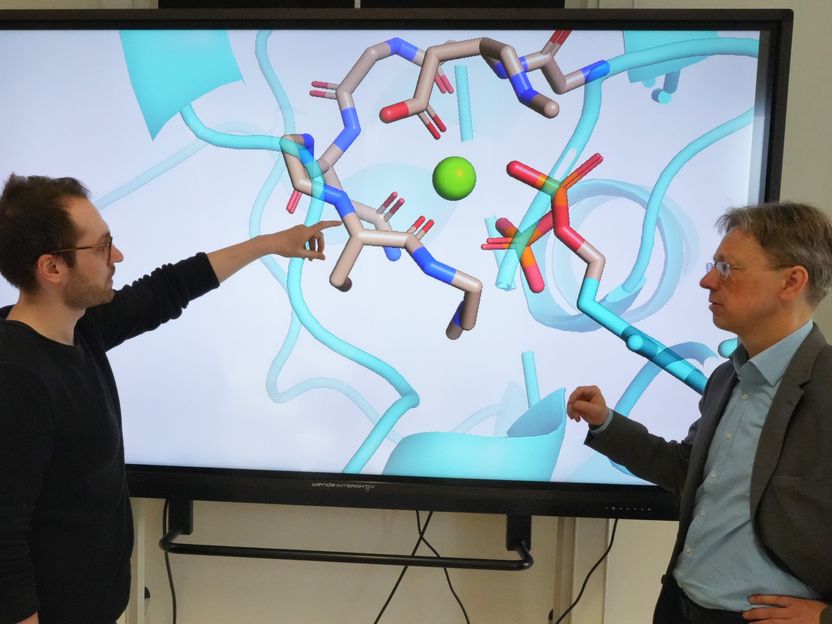
Artificial photosynthesis for environmentally friendly food production, from left: PhD student Vivian Willers und Prof. Volker Sieber
Otto Zellmer / TUM
A group led by Prof. Volker Sieber at the TUM Campus Straubing for Biotechnology and Sustainability (TUMCS) has succeeded in producing the amino acid L-alanine, an essential building block in proteins, from the environmentally harmful gas CO2. Their indirect biotechnological process involves methanol as an intermediate. Until now, protein for animal feed has been typically produced in the southern hemisphere with large-scale agricultural space requirements and negative consequences for biodiversity.
The CO2, which is removed from the atmosphere, is first turned into methanol using green electricity and hydrogen. The new method converts this intermediate into L-alanine in a multi-stage process using synthetic enzymes; the method is extremely effective and generates very high yields. L-alanine is one of the most important components of protein, which is essential to the nutrition of both humans and animals.
Prof. Sieber, of the TUM Professorship for Chemistry of Biogenic Resources, explains: "Compared to growing plants, this method requires far less space to create the same amount of L-alanine, when the energy used comes from solar or wind power sources. The more efficient use of space means a kind of artificial photosynthesis can be used to produce the same amount of foodstuffs on significantly fewer acres. This paves the way for a smaller ecological footprint in agriculture."
Bioeconomy and hydrogen economy in combination
The manufacture of L-alanine is only the first step for the scientists. "We also want to produce other amino acids from CO2 using renewable energy and to further increase efficiency in the realization process," says co-author Vivian Willers, who developed the process as a doctoral candidate at the TUM Campus Straubing. The researchers add that the project is a good example of how bioeconomy and hydrogen economy in combination can make it possible to achieve more sustainability.
Original publication


Other news from the department science














Most read news










More news from our other portals












Last viewed contents

Start-ups in Europe: Significant Potential Remains Untapped - Study Shows Differences Between Start-ups in France, Germany and the United Kingdom

Antimicrobial peptides can reduce salmonella in chickens - This discovery could help improve food safety and protect public health without relying on antibiotic use

Corden Pharma International GmbH - Plankstadt, Germany

Novel virtual trade fair for the process industry - A new way to network and stay informed defies postponed or cancelled trade fairs: The "virtual process show" from 8 to 11 September 2020

Bio-concrete from urine - Feasibility study: How to transform urine into a sustainable building material

A sweet defence against lethal bacteria - Synthesising a potential vaccine candidate for an antibiotic-resistant pathogen causing infections in hospitalised patients

Bayer Group: First-quarter performance as expected - “We’re consolidating roles, designing teams for more impact, and taking out layers”
Playing Dominos: How an Artificial Protein Emerges from Fitting Together Individual Components - Open-source tool opens up many different possible applications in biotechnology and medicine

Decoys for Misguided Antibodies Restore Antiviral Immune Defense
