Roche launches AI initiative to tackle lengthy development times
New NVIDIA computing infrastructure in the US and Europe connects laboratories with AI models using the ‘Lab-in-the-Loop’ approach
Advertisement


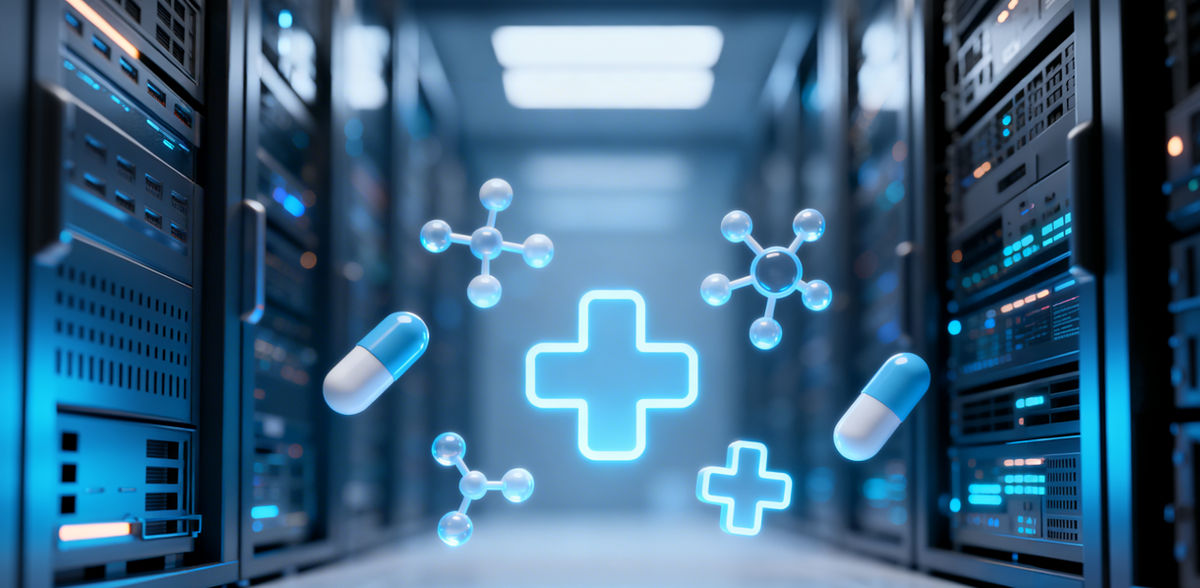
Roche announced an expansion of its global AI infrastructure, deploying a large-scale AI factory powered by a full stack of the latest-generation NVIDIA accelerated computing and AI. Featuring 2,176 high-performance GPUs on premises across the United States and Europe and embedded across the entire value chain, this infrastructure is designed to accelerate the development of diagnostics solutions and therapeutics. With this most recent investment, Roche’s combined on-premise and cloud GPU infrastructure now exceeds 3,500 Blackwell GPUs, which is the greatest announced GPU footprint available to a pharmaceutical company.
This computational expansion marks the next phase of a strategic NVIDIA collaboration that started in 2023. By leveraging NVIDIA AI infrastructure, Roche accelerates drug development through high-quality data and groundbreaking AI.
“In healthcare, time is the most critical variable; every day saved means a life-changing medicine or diagnostic reaches a patient sooner,” said Wafaa Mamilli, Roche’s Chief Digital and Technology Officer. “Our AI factory combines world-class computing power with Roche’s scientific expertise to embed AI across the entire value chain — from discovery to development, manufacturing and commercialisation — transforming how we deliver the next generation of medicines and diagnostics solutions.”
Roche’s AI factory is a high-performance supercomputing platform that powers digital transformation across the organisation. In R&D, the NVIDIA BioNeMo platform enhances Roche’s Lab-in-the-Loop, where biological and chemistry experiments are connected with Roche’s AI models. This helps scientists test hypotheses at scale, accelerate progress, and make discoveries that were not possible otherwise. In manufacturing, digital twins — virtual replicas of production lines — powered by NVIDIA Omniverse libraries, allow engineers to optimize processes and factory designs. In diagnostics, accelerated computing and NVIDIA Parabricks software enable insights across vast datasets. In digital pathology, the technologies scan a large number of images to detect subtle disease patterns. In digital health, Roche uses NVIDIA NeMo Guardrails to ensure safe and reliable healthcare-grade conversational AI.
“Our expanded collaboration with NVIDIA and the launch of this AI factory further strengthens our leadership in AI-driven drug discovery and development,” said Aviv Regev, Executive Vice President and Head of Genentech Research and Early Development (gRED). “By providing the massive computational power needed to continue to scale our Lab-in-the-Loop strategy — a space we have pioneered for over five years — our scientists can build more sophisticated predictive frontier models and further shorten the path from biological insight to life-saving medicine.”
Artificial Intelligence at Roche
The implementation of the AI factory is a cornerstone of Roche’s broader digital transformation. For Roche, AI is a key capability designed to augment or complement human expertise. By expanding access to supercomputing capabilities across the organisation, the company empowers its global workforce to tackle the most complex challenges in human disease. Roche’s vision for AI is fundamentally about accelerating the journey toward preventing, stopping, and curing diseases.
Other news from the department business & finance














Most read news








More news from our other portals


















See the theme worlds for related content
Topic world Diagnostics
Diagnostics is at the heart of modern medicine and forms a crucial interface between research and patient care in the biotech and pharmaceutical industries. It not only enables early detection and monitoring of disease, but also plays a central role in individualized medicine by enabling targeted therapies based on an individual's genetic and molecular signature.

Topic world Diagnostics
Diagnostics is at the heart of modern medicine and forms a crucial interface between research and patient care in the biotech and pharmaceutical industries. It not only enables early detection and monitoring of disease, but also plays a central role in individualized medicine by enabling targeted therapies based on an individual's genetic and molecular signature.