Producing stem cells more effectively and cost-efficiently on an industrial scale
Less plastic, higher yield: stem cell production is set to move from culture dishes to bioreactors
Advertisement


Stem cells offer numerous new applications in research and industry. Traditionally, they are cultured in the laboratory as 2D cell layers. However, this method is not suitable for large-scale commercial production. The research consortium coordinated by the MHH now aims to change this and develop a production platform suitable for industrial use.
Pluripotent stem cells (PSCs) are among the most promising sources of cells in regenerative medicine. Therapies derived from PSCs are already being investigated in more than 100 clinical trials for a range of conditions – from Parkinson’s disease and heart failure to type 1 diabetes. However, all potential applications face the same challenge: how can these cells be produced reliably and cost-effectively on an industrial scale, so that the therapies remain affordable for healthcare systems in the future, particularly when a large number of cells are required for a single treatment? The “INDUZELL” project, led by Prof. Dr Robert Zweigerdt – a cell biologist and head of research group at the Leibniz Research Laboratories for Biotechnology and Artificial Organs (LEBAO) within the Department of Cardiothoracic, Transplant and Vascular Surgery at Hannover Medical School (MHH) – is addressing this problem. The consortium also includes Leibniz University Hannover, Hannover University of Applied Sciences and Arts, and Emden/Leer University of Applied Sciences. The project is being funded by the European Regional Development Fund (ERDF) with around 1.4 million euros over three years.
From 2D to 3D production
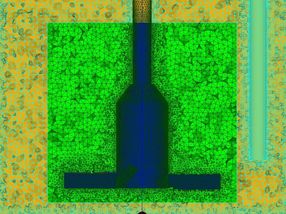
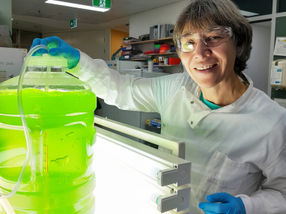
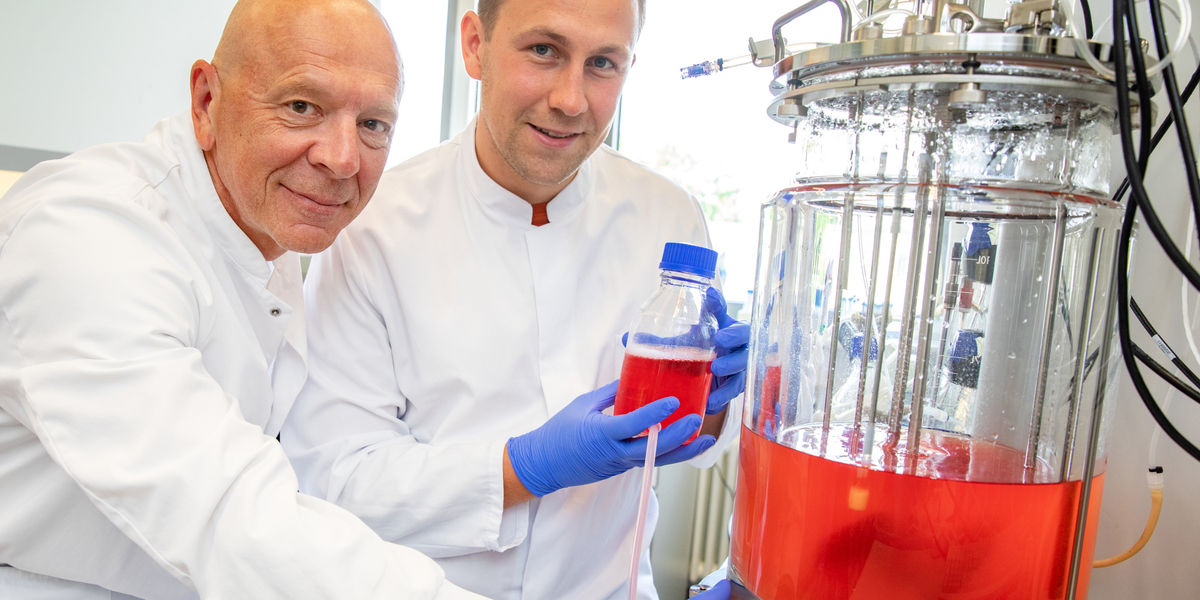
“Pluripotent stem cells, as an unlimited, renewable raw material, can be transformed into virtually any cell type,” explains Professor Zweigerdt. “They therefore offer numerous new applications – from therapeutic cell products in medicine to the development of better active ingredients in the pharmaceutical industry or the production of meat for alternative food production.” To date, these cells are still being cultured in cell culture dishes in many laboratories. This two-dimensional cultivation results in a relatively low yield, whilst requiring a large amount of space and energy, as well as generating a significant amount of plastic waste. It is not suitable for production on an industrial scale. The researchers, however, are focusing on 3D cultivation in standard industrial glass stirred-tank bioreactors. The Zweigerdt research group is a world leader in the development of such processes. In their project, they are developing a production platform that, within a closed system, ensures a high cell yield with consistent quality in an automated, reliable and reproducible manner. “We want to optimise cell production in suspension culture and increase the volume of the bioreactors from the current two litres to up to ten litres,” says the cell biologist.
Culturing with cryopreserved cells
For culturing, the 3D culture is to be seeded directly with frozen cell stocks. This process, known in technical terms as cryopreservation, has several advantages: the frozen cells retain their properties for years without undergoing uncontrolled changes. “In our case, this means that the PSCs are guaranteed to retain their pluripotency – that is, their ability to be reprogrammed into other cell types,” says Dr Kevin Cyrys, co-applicant for the project and research associate in the working group. The cryopreserved cells are transferred in a sterile manner to the stirred-tank bioreactor via so- called cryobags. This minimises the risk of contamination with bacteria or fungi. A further advantage of cryopreserved cells is that they do not need to be pre-cultured and are therefore available exactly when they are needed to inoculate the suspension.
Using AI to create a ‘smart’ production platform
One challenge in cell production in stirred-tank bioreactors is that the cells aggregate to form multicellular clusters. Whilst in culture dishes only the number of individual cells increases over time, here the size of the cell clusters also changes. Single cells form clumps comprising hundreds or even thousands of cells, which, collectively, influence the properties of the entire cell production process. Multimodal microscopy, which utilises various measurement methods and imaging techniques simultaneously, is to be used to precisely record these influences.
With the help of AI and machine learning, the entire production process is to be continuously monitored and optimised. The researchers then aim to use all the collected data to develop a ‘smart’ production platform that can respond to unforeseen process deviations, suggest improvements itself and thus increase cell yield. “The platform is designed to ensure that PSC production can operate reliably on a large scale in future, whilst keeping costs low and minimising material consumption,” emphasises Professor Zweigerdt.


Other news from the department science