Targeting cancer where it has been hiding
Freiburg-based biotech company improves the safety of new antibody therapies by about 90 percent

Advertisement


A biotechnology company based in the Breisgau region has unveiled a method that allows a new generation of potential cancer drugs to be tested for safety risks much earlier than has been the norm to date. BioCopy GmbH, based in Emmendingen near Freiburg, published a comprehensive scientific preprint on its ValidaTe(TM) platform in late July 2026. Key finding: In the lab, the company’s most promising drug candidate binds to approximately 90 percent fewer undesirable structures than an established comparator molecule from the scientific literature—while maintaining the same efficacy against tumor cells.
The problem: Most cancer targets are located inside the cell
Antibodies are among the most successful drugs of the past decades. They function like a search party: they dock onto a specific structure on the surface of a cell and mark it for the immune system. The catch: they can only reach what is visible on the outside.
That is precisely where the problem lies. More than 73 percent of all proteins that play a role in the development of cancer are located inside the cell—out of reach for conventional antibodies. These include some of the longest-known and most difficult-to-treat drivers of tumor diseases.
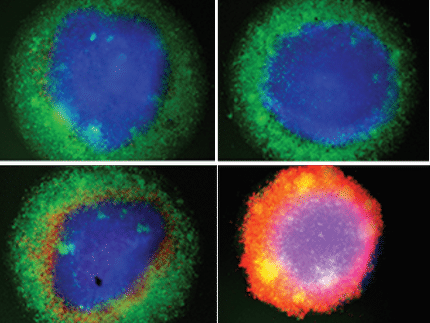
The Solution: The Cell’s Molecular Shop Window
However, there is a clue pointing inward. Every cell in the body continuously breaks down some of its own proteins into short fragments—so-called peptides—and displays them on its surface in a kind of molecular showcase. Experts call this showcase HLA; the combination of the fragment and the showcase is called a peptide-HLA complex. In this way, the immune system can detect from the outside what is happening inside a cell—and identify cells that have become malignant.
BioCopy develops antibodies that can read this very “shop window.” Technically, they are called TCRm antibodies, short for “T-cell receptor mimetics”: They mimic the recognition ability of T cells but can be manufactured, stored, and administered industrially just like conventional antibodies. This brings within reach targets for cancer that were previously considered untreatable.
The risk: When the active ingredient hits the wrong target
This precision has a dangerous downside. The fragments presented here are very short—usually only eight to eleven building blocks long. Similar sequences therefore also occur in completely healthy tissues. If an active ingredient accidentally binds to such a similar structure, it attacks healthy tissue. Experts refer to this as off-target toxicity.
In the past, this risk has abruptly halted clinical trials involving related classes of drugs—in some cases with fatal consequences for trial participants. To make matters worse, conventional safety tests using cell cultures or animal experiments do not adequately replicate the human system on their own. Such risks therefore often only become apparent in humans—after investments amounting to hundreds of millions.
The solution: Five testing stages before the first use in humans
This is where BioCopy’s ValidaTe(TM) platform comes in. It combines computer predictions, a high-throughput measurement method, and cell-based assays into a five-stage safety assessment that is completed in full before the first use in humans.
At its core is a measurement method called HighSCORE: Up to 5,000 different peptide-HLA combinations are applied simultaneously to a chip the size of a postage stamp. In about three hours, the system measures which of these an antibody binds to and how strongly—a volume of data that would take months to generate using traditional methods. The measurement data is then fed back into machine-learning models that predict risks even for untested fragments.
The result: 38 incorrect bindings versus 4
A direct comparison illustrates just how significant this impact is. The team tested an antibody described in a scientific publication that targets the same antigen and compared it with two of their own candidates. In each case, the researchers counted the sequence-similar fragments to which the antibody binds with measurable strength (binding affinity below one micromole per liter)—that is, the potential sources of danger in healthy tissue.
The lead candidate, VR-6, thus binds to approximately 90 percent fewer potentially dangerous structures than the comparison molecule. Crucially, this difference was not only predicted by computer simulations but also confirmed experimentally—in cell culture experiments, the potential drug candidate VR-6 reliably destroyed tumor cells without attacking healthy control cells.
Second Level of Safety: Two Antibodies Instead of One
In addition, BioCopy follows a principle the company calls WiFi(TM) (for “Widened Fingerprint”). This involves combining two different antibodies into a single drug candidate; while both recognize the same tumor target, each exhibits different off-target binding profiles.
The effect is similar to two-factor authentication: Only where both antibodies can bind simultaneously—that is, on the tumor cell—does a sufficiently strong bond form to achieve the full effect. Healthy tissue, which carries only one of the two structures, remains below the threshold for activity. This further reduces the theoretical risk by several orders of magnitude.
The Pipeline: Five Solid Tumor Types
The platform acts as a development engine: Based on it, BioCopy is currently developing five proprietary drug programs, all targeting solid tumors: non-small cell lung cancer, ovarian cancer, bladder cancer, hepatocellular carcinoma, and triple-negative breast cancer. These are diseases for which there are currently few targeted treatment options and for which the prognosis is correspondingly poor.
The drug candidates are designed as so-called T-cell engagers: molecules with two ends, one of which recognizes the tumor cell and the other attracts an immune cell produced by the body, which then destroys the tumor. The most advanced program is the one targeting the MAGE-A4 tumor marker in lung cancer. This development candidate is in the preclinical phase.
Outlook for Even Faster Development
BioCopy sees the next step in development as moving safety testing forward—from the laboratory to an AI-powered, self-learning computer: So far, the HighSCORE chip-based method has been providing the measurement data from which the models learn. The larger this dataset becomes, the sooner unpromising candidates can be weeded out: Instead of empirically testing hundreds of thousands of possible target structures, the software will in the future make a preliminary selection that would then only need to be confirmed in the lab. This could significantly shorten the path from target identification to a finished candidate. That would be a milestone in cancer research.
This also changes the role of the ValidaTe(TM) platform: It would no longer be merely a testing tool for individual molecules at the end of a process, but rather the driving force at the beginning—like a development engine that continuously generates new candidates, selects and evaluates them, filters out the most promising ones, and guides them reproducibly to development readiness—reproducibly and at scale. Individual molecules thus become a scalable pipeline.
The market for therapies targeting intracellular structures is estimated at approximately $45 billion and remains largely untapped.
Beyond Oncology
The principle underlying the technology is not limited to cancer. Every cell in the body displays fragments of its internal proteins in the molecular showcase described above—both diseased and healthy cells. Wherever a disease originates inside a cell and is reflected in this “shop window,” it could, in principle, be addressed from the outside in the same way.
The company points to an interesting area for this: In autoimmune diseases, the immune system attacks the body’s own tissue because it mistakenly classifies certain presented fragments as foreign; an antibody that recognizes precisely this combination could specifically block the misdirected immune cells—rather than suppressing the immune system as a whole, as current medications do.
Both are still prospects, not established programs: BioCopy currently works exclusively in oncology, and projects outside of cancer research are under consideration. However, the benefits of a robust safety assessment might actually be even greater in this area than in cancer therapy—because for diseases that are not immediately life-threatening, significantly stricter standards are applied to a drug’s tolerability.
Who Is Behind the Technology
BioCopy is led by Dr. Matthias Wiedenfels, formerly CEO of STADA Arzneimittel AG and who has held international leadership positions in the pharmaceutical industry for over twenty years. Dr. Jörg Birkenfeld serves as the scientific director; he previously headed the department for biological active ingredient screening at Sanofi. The scientific advisory board includes, among others, Nobel Prize laureate in Chemistry Prof. Hartmut Michel, who was honored in 1988 for elucidating the structure of membrane-bound proteins—that is, for work on precisely the class of molecules at the heart of this project. Also represented on the advisory board is Dr. Rainer Boehm, who previously served as CEO at Novartis.
Context and Next Steps
The publication comes at a time when Germany’s pharmaceutical sector is making headlines primarily for announcements of withdrawals: Boehringer Ingelheim has put investments worth billions on hold, and Eli Lilly has significantly scaled back its project in Alzey, Rhineland-Palatinate. This makes it all the more remarkable that a company with 36 employees in the Breisgau region is presenting a methodological framework that is likely to attract international attention.
The current status of the work must be viewed within the broader context of drug development: these are preclinical data. A preprint has not yet been reviewed by independent experts; the peer-review process is ongoing. Regulatory reviews and clinical trials are required before the drug can be administered to patients for the first time. What this work demonstrates is not a finished drug, but a method for weeding out dangerous candidates earlier—and advancing promising ones more quickly.
The company cites the following as its next steps: expanding the platform to additional target structures and HLA variants, finalizing the complete preclinical safety package for the lead candidate, and forming partnerships with pharmaceutical companies and academic centers. BioCopy aims to develop its first drug candidate by 2027 to the point where it is ready for a clinical trial application and can be out-licensed to a development partner by that time at the latest.
Note: This article has been translated using a computer system without human intervention. LUMITOS offers these automatic translations to present a wider range of current news. Since this article has been translated with automatic translation, it is possible that it contains errors in vocabulary, syntax or grammar. The original article in German can be found here.


Other news from the department research and development





Most read news








More news from our other portals













Something is happening in the life science industry ...
This is what true pioneering spirit looks like: Plenty of innovative start-ups are bringing fresh ideas, lifeblood and entrepreneurial spirit to change tomorrow's world for the better. Immerse yourself in the world of these young companies and take the opportunity to get in touch with the founders.
See the theme worlds for related content
Topic world Antibodies
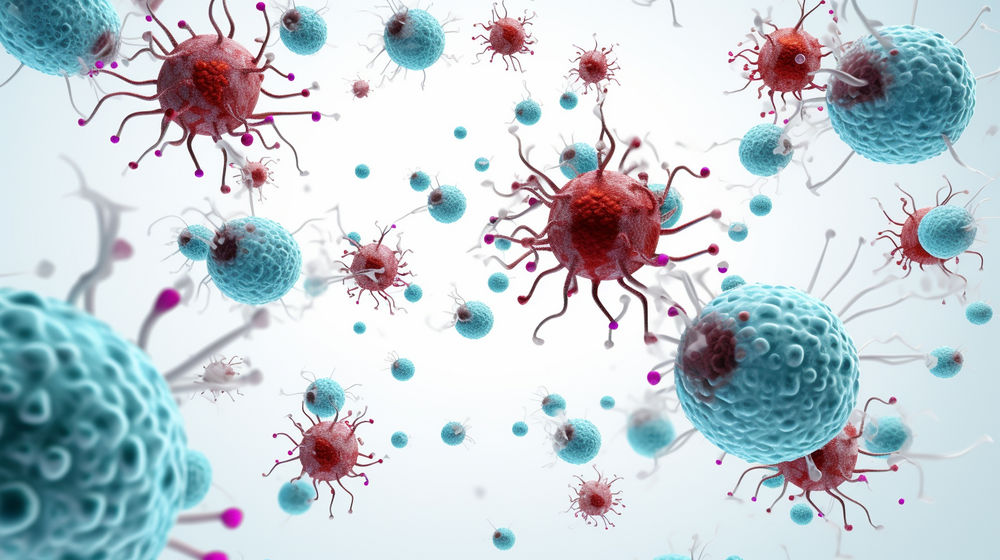
Antibodies are specialized molecules of our immune system that can specifically recognize and neutralize pathogens or foreign substances. Antibody research in biotech and pharma has recognized this natural defense potential and is working intensively to make it therapeutically useful. From monoclonal antibodies used against cancer or autoimmune diseases to antibody-drug conjugates that specifically transport drugs to disease cells - the possibilities are enormous
Topic world Antibodies
Antibodies are specialized molecules of our immune system that can specifically recognize and neutralize pathogens or foreign substances. Antibody research in biotech and pharma has recognized this natural defense potential and is working intensively to make it therapeutically useful. From monoclonal antibodies used against cancer or autoimmune diseases to antibody-drug conjugates that specifically transport drugs to disease cells - the possibilities are enormous