 Verified
Catalog:
How integrated mRNA workflows perform in practice
How integrated mRNA workflows perform in practice
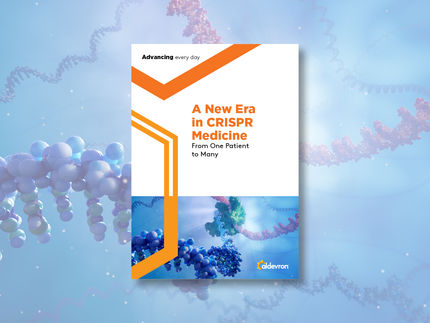
From DNA template to drug product—delivered within real development timelines
- You can see how DNA, IVT, RNA production and LNP come together in a real program, rather than being handled as separate steps
- Reducing handoffs cuts out a lot of the usual delays and back-and-forth that slows things down
- When the workflow is aligned early, it becomes much easier to keep control as you move toward clinical timelines
- Connecting RNA production and delivery avoids having to rework things later just to make the pieces fit
- It’s a more practical way to run mRNA programs—less friction, fewer surprises, and a clearer path forward
A personalized, mRNA-based CRISPR therapy was developed and delivered in under six months—made possible by tightly coordinating development and manufacturing across every critical step.
Rather than operating separate handoffs, DNA template design, IVT, mRNA production, and lipid nanoparticle (LNP) formulation were aligned from the outset as a single, integrated workflow. This reduced delays, streamlined decision-making, and helped maintain control over quality as the program progressed.
Aldevron’s role in cGMP mRNA manufacturing—alongside integrated delivery capabilities—ensured the therapy could be produced rapidly without compromising regulatory rigor or consistency. At the same time, close collaboration across industry, academia, and regulators enabled real-time problem solving and accelerated submission timelines.
Importantly, it wasn’t just the speed—it was how the work was structured. By connecting upstream design with downstream delivery, the team minimized rework, reduced variability, and created a more predictable path from early development through to clinical manufacturing.
This model shows how integrated RNA production and delivery workflows can support faster, more reliable progression for complex gene editing therapies—helping translate scientific breakthroughs into real-world clinical impact.
One workflow, not separate steps
Things move faster when DNA, IVT, RNA, and LNP are treated as one process.
It’s easier to keep everything aligned—and avoid fixing things later.
Quality starts upstream
Template choice, IVT conditions and capping all impact RNA quality.
Getting this right upfront makes everything downstream more straightforward.
Less rework as you scale
Optimizing early—through approaches like IVT screening—helps avoiding having to revisit decisions later.
That makes the transition to cGMP much smoother.
RNA and delivery working together
mRNA production and LNP formulation aren’t separate conversations.
Aligning them early helps ensure the RNA translates effectively into a drug product.
A clearer path through development
Keeping the workflow connected gives you more control as requirements increase.
Fewer handoffs, fewer surprises, and a more consistent route to clinical manufacturing.
A model that can be built on
This isn’t just one-off success. It shows how mRNA programs can be structured to move faster and with fewer surprises.
Request information about How integrated mRNA workflows perform in practice now

Catalog: How integrated mRNA workflows perform in practice
How integrated mRNA workflows perform in practice