Microchip patented which separates and extracts tumor cells in the blood
Ikerlan-IK4 and Mondragón Unibertsitatea are taking part in a project initiated by the Spanish National Research Council, CSIC, and which has developed a microchip capable of separating and extracting tumour cells in the blood stream by means of ultrasonic waves. The Foundation General Hospital of the University of Elche, together with researcher Alfredo Carrato, has also collaborated on this project.
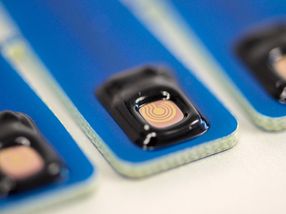
The patented microchip has the size of a one euro coin, incorporating a small channel along which a sample of blood containing the patient's tumour cells flows. By means of ultrasonic waves focused on a specific zone, these cells, having a density and size different from the rest, concentrate at the point from where they are gathered.
The device, made of plastic, has potential advantages in the detection of metastasis in its initial phases, and in the control of the effectiveness of the therapy applied to cancer patients. It is made up of an acoustic wave piezoelectric generator, a microchip and a fluidic capsule.
Another of the unique features is that the process is totally non-invasive, given that there is no need to introduce any foreign object into the blood sample in order to detect tumour cells circulating in the blood. Moreover, it maintains the properties of the cells so that subsequent studies or biomolecular analyses can be carried out.
The next stage is developing an industrial-scale prototype. To this end, the research team is already working on perfecting the microchip, and on developing a system for the automatic detection and count of the tumour cells.
Other news from the department science








Get the life science industry in your inbox
From now on, don't miss a thing: Our newsletter for biotechnology, pharma and life sciences brings you up to date every Tuesday and Thursday. The latest industry news, product highlights and innovations - compact and easy to understand in your inbox. Researched by us so you don't have to.