Probiodrug Collaborators Explain Interplay of Key Suspects in Alzheimer’s Disease
Nature paper demonstrates that toxicity in AD is induced by pyroglutamate Abeta and is tau protein dependent
Advertisement


Probiodrug AG announced its scientists and academics collaborators published seminal findings on the role of pyroglu Aβ in AD pathology in Nature. The new findings add to the growing body of evidence that pyroglu Aβ plays a crucial role in the initiation of AD. In addition, the research results further elucidate the mechanism by which pyroglu Aβ triggers neuronal toxicity.
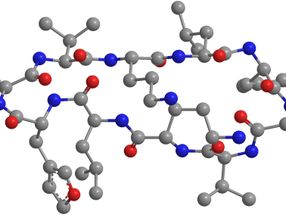
The data published today suggest that pyroglu Aβ co-aggregates with “normal” Aβ peptides to form low molecular weight oligomers (LMOs), which are structurally distinct and far more toxic to cultured neurons than oligomers derived from normal Aβ. Moreover, the presence of the neuronal protein tau is essential for toxicity mediated by LMOs that contain pyroglu Aβ. The results have been substantiated in transgenic mice designed to express increased levels of pyroglu Aβ. In these animals, the pyroglu Aβ mediated neuronal loss and gliosis was prevented, if tau expression was shut down. The study is supplemented by results published in the Journal of Neurochemistry (online April 2012). Here the Probiodrug researchers reveal, that the aggregation propensity is caused by the hydrophobic nature of pyroglu Aβ.
The scientists also were able to demonstrate that the cytotoxicity is propagated by a prion-like templating mechanism of Aβ misfolding initiated by pyroglu Aβ: even after strong dilution to a solution containing only 0.000625% pyroglu Aβ, the mix after 24h developed enough toxicity to kill 50% of neurons treated with it.
“This publication delivers significant evidence to our hypothesis that pyroglu Aβ plays a critical role in the initiation of AD,” said Prof. Dr. Hans-Ulrich Demuth, CSO of Probiodrug. “It was also extremely surprising to us, that the pyroglu Aβ containing or propagated low-molecular weight oligomers remain stable for days - in contrast to the short-lived oligomers not formed by the pyroglu Aβ initiated mechanism. The new data for the first time demonstrate a relationship between pyroglu Aβ oligomer formation and tau protein in the development of neuronal toxicity.”


Other news from the department science