Vanderbilt researchers help reveal complex role of genes in autism
Multicenter study hones in on 2 genes as likely risk factors
Advertisement


mutations in hundreds of genes involved in wiring the brain may contribute to the development of autism spectrum disorders (ASD).
That is one of the rather daunting conclusions of a paper published in the current issue of the journal Nature by a multi-institutional team that included researchers at Vanderbilt University Medical Center.
But while there is no simple explanation for ASD, the researchers identified a few genes as "genuine risk factors," raising hopes that they will be able to discover the underlying biological cause of these disorders. Numerous other genes are also strongly implicated based on their biological functions and roles in conditions related to ASD.
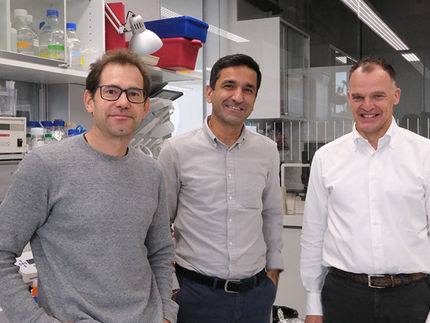
That knowledge could lead, in the future, to the ability to determine one's risk for developing autism and to new, more effective and personalized ways to treat individuals with an ASD, said James Sutcliffe, Ph.D., associate professor of Molecular Physiology & Biophysics and of Psychiatry at Vanderbilt, and a senior author of the paper.
Autism is a spectrum of developmental disorders characterized by impairments in communication and social interaction, and patterns of repetitive, restricted and stereotyped behaviors. According to the U.S. Centers for Disease Control and Prevention, it occurs in one in 88 children in the United States.
Researchers believe that 80 percent to 90 percent of the risk of developing ASD results from genetic factors. Despite this, only a few inherited risk factors have been discovered to date.
In the current study of 175 children with ASD and their parents, researchers in the ARRA Autism Sequencing Collaborative scoured the genome – using a technique called massively parallel sequencing – to search for mutations that might affect autism risk.
In addition to Vanderbilt, the collaborative includes researchers from Boston at the Broad Institute of MIT and Harvard and Massachusetts General Hospital, along with Baylor College of Medicine, Mount Sinai School of Medicine, the University of Pennsylvania, Carnegie Mellon University, and the University of Pittsburgh.
The researchers focused on the exome, the fraction of the human genome coding for proteins. They searched for single-letter DNA mutations that occurred spontaneously in the children and which were not present in their parents' genome.
Although rare, these so-called de novo point mutations tended to occur in genes that are functionally related to each other and to previously identified autism genes. This suggests that the proteins they encode may in some cases physically interact with each other. The relationships among the proteins encoded by these genes further supports their likely role as ASD risk factors.
With data from two other studies published in the current issue of Nature and with additional exome sequencing, the researchers identified two candidate genes. However, they explain less than 1 percent of the genetic risk of autism.
"These results clearly demonstrate the potential of DNA sequencing to articulate specific risk factors for autism," said the Broad Institute's Mark Daly, Ph.D., who, like Sutcliffe, is a senior author of the paper and a lead investigator of the ARRA Autism Sequencing Collaborative.
"We have only scratched the surface, but with continued collaborative efforts, these gene discoveries will point us to the underlying biological roots of autism."


Other news from the department science